
Quick Overview
Automation can move fast. Judgment moves carefully. Reliable AI training needs both.
No matter how sophisticated a model becomes, it still runs into situations it can’t confidently resolve on its own an unusual image, an ambiguous sentence, a scenario its training data simply didn’t cover well. That’s the gap human in the loop annotation is built to close: keeping trained people actively involved in labeling, reviewing, and correcting the data a model learns from, rather than leaving that job entirely to automation. This is what human in the loop ai looks like in practice, and this piece walks through what the concept actually means, why it still matters at every stage of AI training, and where it shows up across real industries today.
A quick look at what’s ahead:
- Why automated labeling alone tends to miss exactly the cases that matter most
- What a HITL workflow looks like once it’s running end to end
- The main annotation techniques used across computer vision projects
- Where this shows up across healthcare, retail, security, and autonomous systems
- The practical trade-offs teams weigh when they build this into their own pipeline
Understanding Human-in-the-Loop (HITL) Annotation
At a basic level, human-in-the-loop describes any AI system where people are deliberately positioned to review, correct, or guide what a model produces, instead of letting automation run entirely unsupervised. Applied specifically to training data, this becomes human-in-the-loop annotation: the practice of having trained reviewers label new examples and check a model’s own predictions before either becomes part of the next training cycle.
The human in the loop meaning is sometimes reduced to “a person checks the output,” but it’s really about matching oversight to risk. Some predictions carry little consequence if they’re wrong; others a medical finding, a content-moderation call, a safety-critical detection carry a great deal. Good human in the loop design puts review effort where getting it wrong would actually cost something, rather than spreading it evenly across everything a model produces.
Significance of HITL Annotation:
Even strong AI models are only as reliable as the patterns they’ve been trained to recognize. When new data drifts even slightly from those patterns an unfamiliar accent, an odd product photo angle, a rare medical presentation automated systems tend to produce a confident answer rather than flag genuine doubt. Human reviewers catch what that confidence hides, correcting mislabeled or ambiguous examples before they quietly become part of a model’s foundation. This is precisely the value of human in the loop training: pairing the scale of automation with people who can catch what a model, left alone, would simply guess at.
Context is a related strength people bring that automation still struggles to replicate. Cultural nuance, sarcasm, regional variation, and domain-specific detail are the kind of signals a trained annotator picks up on almost instinctively, but that a purely automated labeling system tends to flatten or miss outright particularly in language-heavy or visually ambiguous tasks.
Rare and unusual scenarios present a similar challenge. Models perform well on the patterns that show up often in their training data and considerably less predictably on everything else, which is exactly where human review earns its keep — making sure uncommon cases still get labeled correctly instead of being smoothed over by a system that’s never seen anything quite like them.
Bias is the fourth piece of this. AI systems inherit whatever patterns exist in their training data, fairness included, and without a deliberate check, skewed data produces skewed outcomes. Involving a range of reviewers with different backgrounds and perspectives is one of the more dependable ways to catch that kind of imbalance before it becomes embedded in how a model behaves.
The Impact of HITL on AI Model Performance
Bringing structured human review into AI training tends to show up in a few measurable ways. Verified annotations reduce both false positives and false negatives, which directly improves how much a team can trust a model’s output. Diverse review also tends to produce fairer outcomes across different user groups, rather than a model that performs well on average but poorly for specific segments of its audience. And because human reviewers document why a correction was made, the resulting model tends to be easier to explain a meaningful advantage in regulated or high-stakes applications where “the model said so” isn’t a sufficient answer.
There’s a scalability angle here too, even though it might seem counterintuitive at first. A model that’s been trained with consistent human oversight tends to need fewer emergency fixes after deployment, since many of the failure patterns that would otherwise surface in production get caught and corrected during training instead. That translates into fewer retraining cycles triggered by discovered errors, and a system that’s more predictable to maintain as it scales to new use cases or larger volumes of data.
How Specialist Providers Approach Human in the Loop Annotation
Enterprises don’t always need to build this capability entirely from scratch. Specialist data annotation providers combine trained reviewer teams with AI-assisted tooling to make human in the loop annotation more efficient without cutting corners on accuracy covering everything from computer vision and natural language tasks to generative AI evaluation and trust-and-safety review. The value isn’t just extra headcount; it’s the accumulated process knowledge of running annotation programs across many industries, which tends to surface labeling edge cases a team building its first in-house program hasn’t encountered yet.
That accumulated experience shows up in practical ways guidelines that already account for common edge cases, quality-control checks that have been refined across many projects rather than one, and reviewer pools that can be reallocated as a project’s needs shift. For a team weighing how much of this to build internally, that head start is often the deciding factor.
Key Annotation Techniques in HITL Workflows
Within computer vision specifically, a handful of techniques come up again and again, each matched to a different kind of visual task:
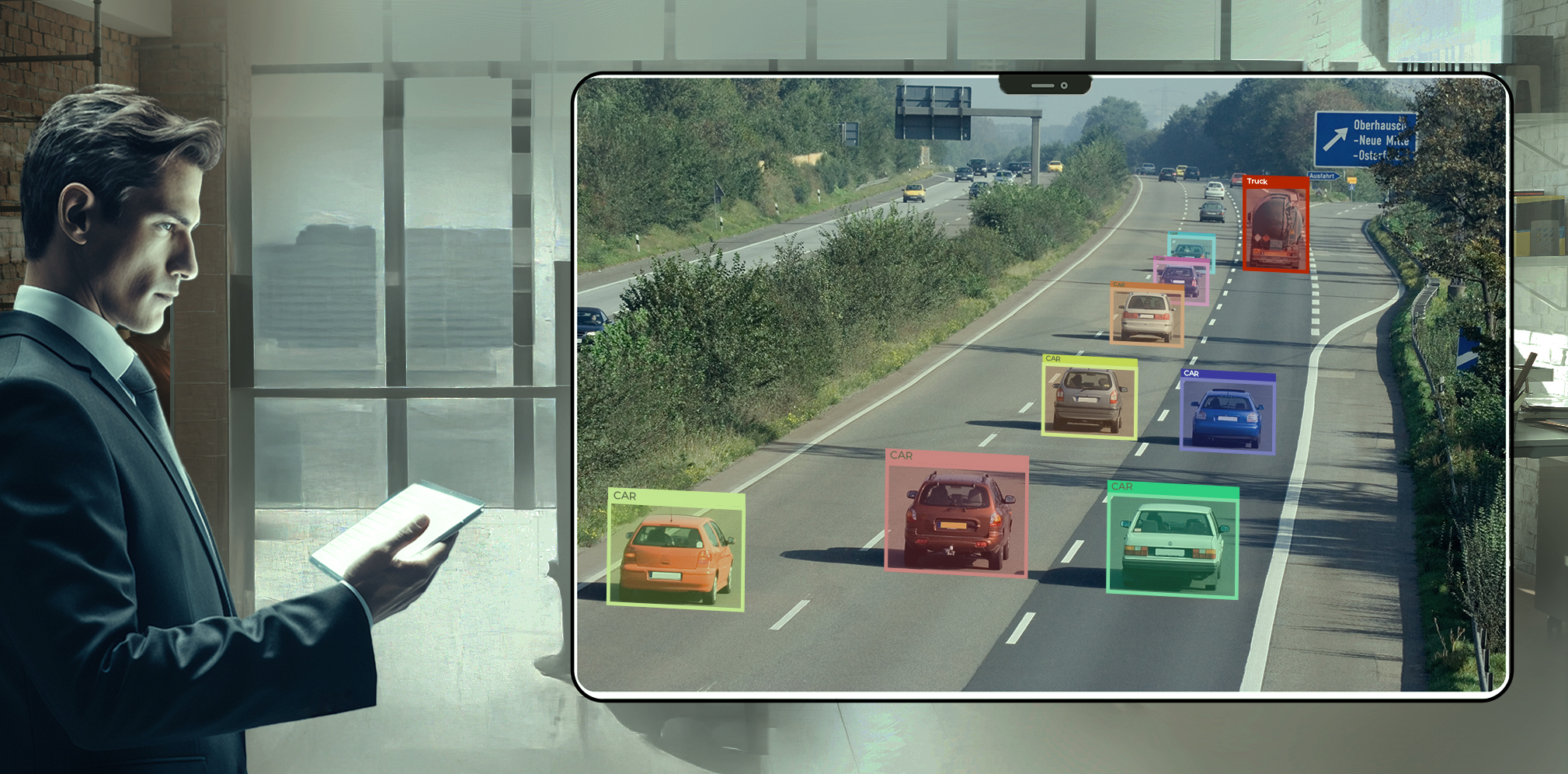
- Bounding Box Annotations: Reviewers draw a rectangle around each object in an image, giving a model a straightforward way to detect and separate multiple items in a single scene useful for retail shelf analysis, inventory checks, and general object detection.
- Semantic Segmentation: Rather than a rough outline, every pixel in an image gets assigned a category. That level of precision is what allows a model to separate a tumor from surrounding tissue, or a pedestrian from the road surface behind them, with far more accuracy than a bounding box alone would allow.
- Key-Point Annotation: Specific reference points facial landmarks, joint positions are marked directly on an object, supporting tasks like gesture recognition, pose estimation, and motion tracking.
- Frame-by-frame video annotation: Objects are labeled consistently across a sequence of frames so a model learns how they move over time, not just how they look in a single still image important for traffic monitoring, surveillance, and robotics.
Each of these techniques plugs into the same underlying hitl workflow: a human in the loop hitl cycle where a model proposes a label, a trained reviewer checks it, and the outcome feeds back into the next round of training.
Real-World Applications of HITL Annotation:
In autonomous vehicles, human reviewers label the edge cases a perception model hasn’t reliably seen before unusual signage, unpredictable pedestrian movement, poor-visibility conditions which matters enormously given how little room for error safety-critical systems have. A model that guesses confidently in these situations is far riskier than one that’s been trained on carefully reviewed examples of exactly these scenarios.
In healthcare, radiology and pathology teams rely on accurately annotated scans to train models that flag potential abnormalities. A specialist confirming or correcting those labels is part of what allows the resulting model to support, rather than second-guess, a clinician’s diagnosis and it’s also what keeps rare presentations from being mislabeled simply because a model hasn’t encountered many examples of them.
In security and surveillance, facial recognition and behavior-flagging systems depend on carefully reviewed annotation to keep false identifications low an area where an unchecked automated system carries real consequences for the people it misidentifies, and where the cost of getting it wrong is measured in more than just a bad user experience.
In retail and e-commerce, HITL annotation supports product tagging, catalog categorization, and search relevance all things that directly shape whether a customer can actually find what they’re looking for, and whether a recommendation engine surfaces products people actually want.
HITL Annotation Challenges & Solutions:
High Costs: Human review takes time and expertise, both of which cost money. Pairing AI-assisted pre-labeling with targeted human review rather than reviewing everything at the same depth keeps that cost proportional to the risk involved.
Time-Consuming Process: Manual review can slow a pipeline down if it’s applied indiscriminately. Automating the routine, high-confidence portion of labeling frees human attention for the ambiguous cases that actually need it.
Scalability Issues: Large datasets can outpace a fixed internal team quickly. Working with a provider who can flex capacity up or down avoids the choice between under-resourcing a project or over-hiring for a temporary spike.
Inconsistent Labelling: Different reviewers can reach different conclusions on similar data without shared guidelines. Structured training, clear labeling standards, and inter-annotator agreement checks comparing how multiple reviewers label the same sample catch that inconsistency early.
Should You Outsource HITL Annotation
Building annotation capability in-house or partnering with a specialist provider is a decision most growing AI teams eventually face. The table below outlines how the two approaches typically compare.

Neither option is automatically correct a narrow, highly specialized need with close internal oversight often favors in-house, while broader or fast-scaling needs tend to favor a partner who already has the infrastructure running.
Human in the Loop Beyond Computer Vision
Most of the concrete techniques above come from computer vision, since visual labeling is easy to picture a box is either drawn correctly or it isn’t. But the same logic extends well past images. In text-heavy tasks, human reviewers confirm sentiment labels, resolve ambiguous intent classifications, and check whether a generated response actually addresses what was asked rather than simply reading fluently. In generative AI specifically, human judgment plays an outsized role in evaluating outputs that don’t have one obviously correct answer ranking which of several model responses is clearer, safer, or more useful, and feeding that ranking back into how the system is trained.
The specific technique changes by data type, but the underlying reasoning stays the same: wherever a model has to make a judgment call that automation alone can’t fully validate, a human in the loop step is what keeps that judgment grounded in something real.
What Makes Human in the Loop Annotation Effective
Including people in the process doesn’t automatically guarantee better outcomes a few practices tend to separate the programs that work well from the ones that don’t.
Targeting review effort matters more than applying it everywhere equally. Routing a model’s lowest-confidence or highest-risk outputs to human reviewers is a far better use of that time than reviewing every output at the same depth regardless of how much is actually at stake.
Reviewer training matters just as much. Someone unfamiliar with a domain’s finer points will make many of the same mistakes an under-trained model would, which means annotation quality is ultimately bounded by how well the people doing it understand the task.
And treating corrections as a feedback signal, not just a fix, is what keeps a model actually improving. Every correction a reviewer makes points at something a mislabeled category, an ambiguous guideline, a genuinely hard edge case and systems that feed that signal back into training tend to keep closing the gap between what a model predicts and what’s actually correct, long after launch.
Finally, escalation paths matter more than they might seem to at first glance. Ambiguous cases shouldn’t simply get decided by whichever reviewer happens to see them first a clear route to a senior reviewer or domain expert keeps genuinely difficult calls from turning into inconsistent ones, which over time is often the difference between a dataset that stays clean and one that slowly accumulates small contradictions.
Common Misconceptions About Human in the Loop
A few assumptions tend to come up whenever this topic gets discussed, and most of them don’t hold up well in practice.
“It means a person checks everything.” Most programs route only a fraction of outputs to human review usually the lowest-confidence or highest-stakes cases rather than reviewing every single prediction at the same depth, which would be both wasteful and impossible to scale.
“It slows AI systems down.” Done well, human review runs alongside automated processing rather than replacing it. The goal is catching the smaller set of cases that actually need judgment, not inserting a manual step into every decision a system makes.
“A well-performing model doesn’t need it anymore.” Strong performance on a test set doesn’t guarantee strong performance on data a model hasn’t encountered yet. Removing human review once results look good tends to reintroduce exactly the blind spots the process existed to catch in the first place.
Getting Started With Human in the Loop
Teams introducing this for the first time tend to follow a similar path, even when the specific tools differ. It usually starts narrow picking one high-value or high-risk data type rather than routing everything through review at once which keeps initial guidelines manageable and gives a clear baseline to measure against.
From there, guidelines get tested before they get scaled. A short pilot, where a small group of reviewers label the same sample set and results get compared, tends to surface unclear instructions early far cheaper to fix at that stage than after thousands of examples have already been labeled inconsistently. Coverage then expands gradually, folding in new categories as they come up rather than trying to anticipate every scenario in advance.
Conclusion
HITL annotation isn’t a finishing touch applied at the end of a project it’s a structural choice that shapes how accurate, fair, and adaptable a model becomes over time. As human in the loop machine learning continues to take on more consequential decisions, keeping people genuinely involved in how those systems learn remains one of the more dependable ways to keep them trustworthy. The best-performing AI models tend to share one thing in common: they were trained on the best-reviewed data, not just the largest dataset available.
FAQ
1. What is human in the loop annotation?
Human in the loop annotation is the practice of having trained people label, verify, or correct the data used to train an AI model, rather than relying solely on automated labeling.
2 . What does human in the loop mean in AI development?
It describes an AI system built so that people review or guide outputs at specific points in the pipeline, with the level of review matched to how much a wrong answer would actually cost.
3. How does a hitl workflow improve AI training outcomes?
By making review a repeating cycle rather than a one-time check model output, human correction, retraining a hitl workflow lets a model keep improving well after its initial launch.
4. What are some common human in the loop ai examples?
Radiologists confirming AI-flagged findings in medical scans, annotators labeling rare driving scenarios, and reviewers checking flagged content before action is taken are all everyday examples.
5. Why does human in the loop machine learning matter for long-term performance?
Because training data isn’t static in this approach every human correction becomes a new data point that helps a model keep closing the gap between its predictions and real-world accuracy.