High Quality Polygon Annotation Services

What is Polygon Annotation?

Polygon annotation enables accurate drawing around every corner of a complex structure making it easier for AI models to recognize and respond. This allows capturing of irregular objects, allowing labelling and mapping of the elements that are visible in an image. Polygons can not only capture the outline of an object but also eliminate noise that is found within the bounding box which can potentially result in high accuracy. Hence, such polygonal techniques are particularly used in making irregularly shaped objects such as road sign boards or different postures of humans in sports recognizable to the computer vision models.

Types of Polygon Annotation

Our polygon annotation services help images to be precisely categorized into specific object categories by classifying individual polygons. Many types of polygonal annotation exist for object detection, classification, and semantic segmentation.

We offer precise labelling of coarse objects and irregularly shaped objects making them recognizable to machine learning models for computer vision through polygon image annotation.

We assist the AI models to understand real-world scenarios using polygon segmentation of asymmetrical elements ensuring improved visual perceptions.
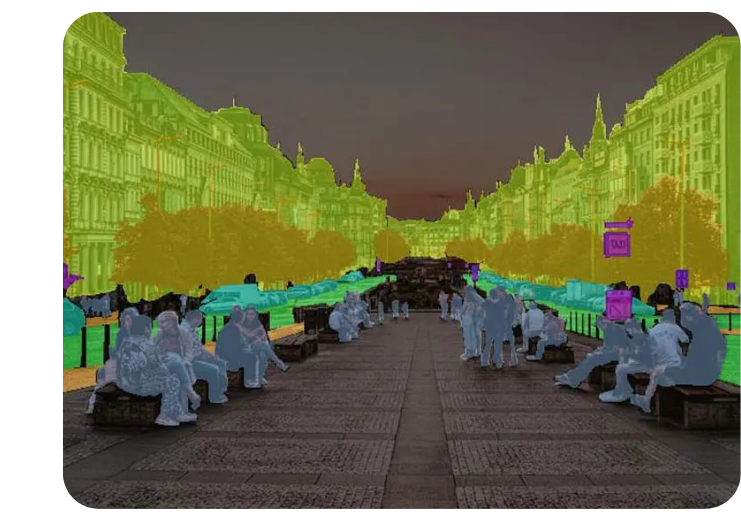

We tightly fit annotations in a variety of orientations, teaching the object detection model more about different perspectives thereby providing additional information through polygon annotation services.

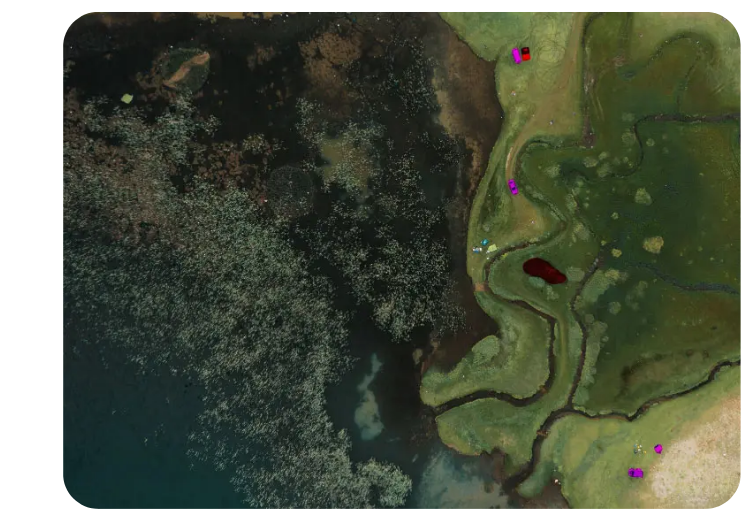
We annotate both coarse objects in images and unevenly shaped objects such as trees, rooftops, and chimneys captured through drones or satellites for easy localization using polygon annotation services.
Types of Polygon Annotation

Our polygon annotation services help images to be precisely categorized into specific object categories by classifying individual polygons. Many types of polygonal annotation exist for object detection, classification, and semantic segmentation.

Detection of Irregularly Shaped Objects

We offer precise labelling of coarse objects and irregularly shaped objects making them recognizable to machine learning models for computer vision through polygon image annotation.
Detection of Irregularly Shaped Objects

Semantic Segmentation for Irregular Shape

We assist the AI models to understand real-world scenarios using polygon segmentation of asymmetrical elements ensuring improved visual perceptions.
Semantic Segmentation for Irregular Shape

Improved Augmentation

We tightly fit annotations in a variety of orientations, teaching the object detection model more about different perspectives thereby providing additional information through polygon annotation services.
Improved Augmentation

Object Localization Services

We annotate both coarse objects in images and unevenly shaped objects such as trees, rooftops, and chimneys captured through drones or satellites for easy localization using polygon annotation services.
Object Localization Services

Text Translation Services

Text Translation Services

Need customized polygon annotation solutions? Let’s Discuss

Real-World Applications of Polygon Annotation

Labelling and annotation of data using polygons can be applied to a wide variety of Artificial Intelligence and Machine Learning use cases. From automobiles to retail to e-commerce, NextWealth’s data annotation and labelling services are backed by nearly a decade of industry experience.

Agriculture Industry

Polygon image annotation provides accurate detection of various patterns such as bug positions, crop rows, and so on enabling computer vision to provide real-time insights from the field resulting in improved crop yield.

Satellites and Drones
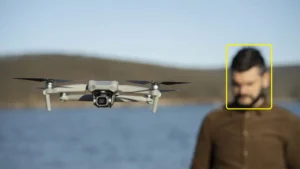
Polygon annotation provides high-level precision and contours, enabling satellites and drones to recognize irregular shapes from above, such as rooftops of houses, swimming pools, and trees.

Autonomous Driving
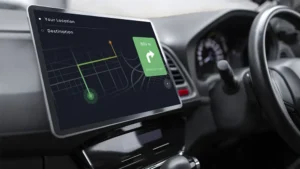
Polygon annotation provides pixel-perfect precision and guidance to autonomous vehicles and helps in improving safety by identifying road boundaries, walkways, and other features which might be difficult to see.

Retail
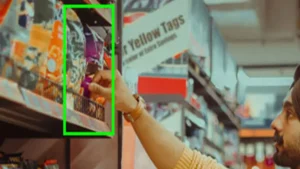
Image annotation services using artificial intelligence and polygonal annotation techniques help create a powerful engine that can provide customers with a personalized shopping experience and make the sale process easier for sellers.

Healthcare

Data annotation techniques like polygon segmentation play a vital role in analyzing and diagnosing various diseases. Machine learning models can be trained on high-precision data sets to improve diagnostics for clinical devices and healthcare.

Robotics

Accurate polygon annotation services with the right labelling provide visual inputs to train robotics and AI models to recognize images and help perform various tasks in many industries.


Successful client stories and case studies

Deep dive into our journey of partnering with the global business giants.

Computer Vision

Computer Vision

project to identify phishing threats

1 min read

Learn More
Computer Vision

Facial Annotation

features using object detection and classification

1 min read

Learn More
Computer Vision

Training Datasets

for machine learning algorithms

1 min read

Learn More

Why partner with us

Our services are tailored to elevate the efficiency of your AI/ML processes
Managed Services l Captive Services l Staffing Services

5,000+

Skilled
Employees

1B+

Data
Transactions

40+

Live Projects

10+

Fortune 500
Clients

73

NPS Score

Testified and trusted by
the best in the world of business

I am really happy at all the great things we have been able to achieve in the past 1 year. The relationship now has a solid foundation, and I am sure NextWealth will continue to be a formidable partner going ahead, bringing a delightful experience for our customers.

Sr. Program Manager Fortune 10 Technology Company

NextWealth has been an invaluable partner to us, significantly accelerating our growth by handling critical data operations and providing strategic insights.

Founder India’s Largest Market and Competitor Intelligence Company

NextWealth’s hard work and dedication are truly making a difference, streamlining our processes significantly. We really appreciate it!

Principal AI & Machine Learning Scientist Global Leader in Threat Detection and Security Screening

My experience with NextWealth has been wonderful. The diligent team consistently delivers on time with a focus on quality. Their innovation-driven mindset fosters a win-win situation for both teams.

eCommerce Strategy Manager Europe’s Leading Fashion and Lifestyle Platform

I am happy with the improvement in the performance. I have seen positive improvement, and we have a long way to go.

Staff Technical Operations Manager Fortune 10 American Retail MNC

NextWealth’s in-depth analysis helped us pinpoint exactly what needs to be done to address the issues.

Specialist Quality Services, Fortune 10 Technology Company

With excellence in Quality, Cost, and TAT—key pillars of any operation—NextWealth sets a benchmark for operational efficiency and beyond.

Associate Director Indian Equity Research Company

We have experienced significant growth—a success we could not have achieved without the expert support, hard work, and commitment of NextWealth.
CEO Leading Marketing Agency

Explore Resources

Know how we are accelerating business growth by enabling effectiveness in AI/ML

FAQs

What is polygon annotation, and how does it work?

Polygon annotation is a technique where annotators draw multi-sided shapes around irregular objects in images by connecting points along the object’s outline. Unlike simple bounding boxes, polygons follow the exact contours of complex shapes, making them ideal for irregularly shaped objects like road signs, human figures, or natural elements. This method eliminates background noise and provides AI models with precise object boundaries.

How is polygon annotation different from bounding box annotation?

Bounding boxes create rectangular frames around objects, which often include unwanted background pixels. Polygon annotation traces the exact outline of an object by placing multiple vertices along its edges. This precision reduces noise, improves model accuracy, and is particularly useful for objects with irregular shapes that don’t fit neatly into rectangles.

Which industries commonly use polygon annotation services?

Polygon annotation is widely used in autonomous driving for detecting road features, agriculture for crop and pest identification, healthcare for medical image analysis, retail for product recognition, satellite imagery for mapping rooftops and terrain, and robotics for object identification. Any industry requiring precise object detection benefits from this technique.

What types of objects require polygon annotation instead of bounding boxes?

Objects with irregular shapes such as pedestrians in various poses, trees, rooftops, road boundaries, agricultural crops, swimming pools from aerial view, product packaging with unique shapes, and medical anatomical structures benefit from polygon annotation. Basically, any object where the outline matters more than a simple rectangular frame.

How accurate is polygon annotation compared to other annotation methods?

Polygon annotation typically achieves higher accuracy than bounding boxes for irregularly shaped objects because it captures pixel-perfect boundaries. By eliminating background noise within the frame, it provides cleaner training data for AI models. The accuracy depends on annotator expertise and quality control processes.

How long does a typical polygon annotation project take?

Project timelines depend on dataset size, image complexity, number of classes, quality requirements, and team size. Small projects might complete in days, while large-scale datasets for autonomous vehicles could take weeks or months. Experienced providers can handle thousands of images with quick turnaround times.

How does polygon annotation improve autonomous vehicle performance?

Polygon annotation helps autonomous vehicles precisely identify road boundaries, lane markings, pedestrians, cyclists, and other vehicles regardless of their position or orientation. This pixel-level precision enables safer decision-making in complex traffic scenarios and improves object tracking accuracy.

What quality control measures ensure accurate polygon annotations?

Quality control includes multi-level reviews, cross-validation by different annotators, automated consistency checks, sample audits, adherence to detailed annotation guidelines, regular feedback loops, and precision metrics tracking. Professional services typically maintain accuracy levels above 95%.