Driver Behaviour Analysis: AI-Powered Insights for Safer, Smarter Fleets
Every year, road accidents cost the global economy over 1.19 million millions of lives. For transportation and logistics companies, driver behaviour is no longer just a safety concern; it’s a business-critical factor that impacts fuel efficiency, compliance, insurance, and brand reputation. With the rise of AI-powered telematics and computer vision, organizations now have the tools to understand driver behaviour in real time. Driver Behaviour Analysis empowers fleets to reduce accidents, cut costs, optimize performance, and build lasting trust with stakeholders.

What is Driver Behaviour Analysis?

Driver Behaviour Analysis is the process of monitoring and interpreting driving patterns using a blend of AI, telematics, and video analytics. It detects risky behaviours such as:

  • Harsh braking & sudden acceleration
  • Speeding & unsafe cornering
  • Driver distraction & mobile use
  • Drowsiness & fatigue

By combining machine learning with Human-in-the-Loop (HITL) validation, companies can achieve highly accurate detection, minimize risks, save costs, and stay compliant with road safety regulations.

Types of Driver Behaviour Analysis

Telematics-Based Analysis

GPS and IoT sensors track speed, braking, and acceleration patterns to identify unsafe driving and optimize fuel use. Example: A logistics operator noticing clusters of harsh braking incidents at specific delivery zones might act to train drivers or adjust routes; potentially mitigating brake-related crashes, which account for about 22% of fleet accidents..Fleet Response Read More
Telematics-Based Analysis

Video Telematics

AI-powered cameras monitor distractions, phone use, seatbelt compliance, and fatigue. Human validation ensures accuracy and reduces false alerts. Example: The Insurance Research Council (IRC) found telematics programs can reduce accident frequency by up to 20%, with related reductions in claim severity and improved driver behaviour.IRC Read More
Video Telematics / Camera-Based Analysis

In-Cabin Sensing

Wearables and in-cabin sensors measure heart rate, eye movement &stress levels to detect drowsiness or health risks. Industries like mining and long-haul trucking rely on this to prevent fatigue-related accidents in high-risk environments
In-Cabin Sensing

Behavioural Pattern Recognition

AI models study long-term driving habits to highlight recurring risky behaviours. Fleet managers use this to deliver targeted training, reward safe drivers, and predict potential accident risks before they occur.
Behavioural Pattern Recognition

Semantic Segmentation
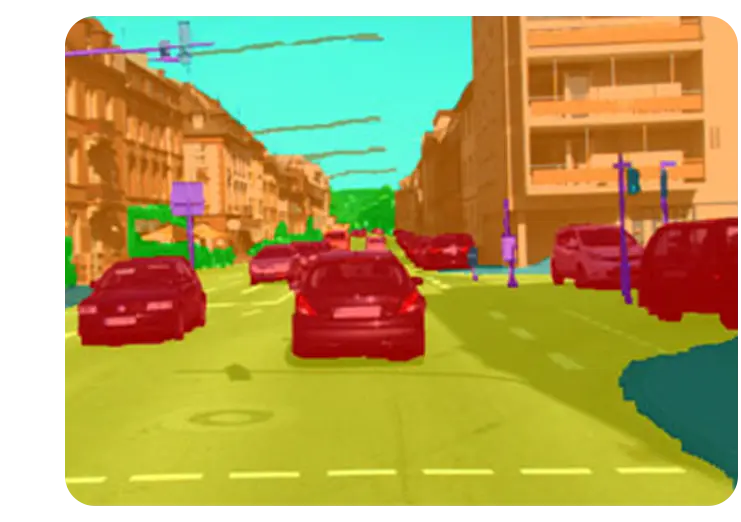
By assigning a specific class of objects to each pixel in an image, semantic segmentation helps train computer vision based ML models. Such distinct tagging of each pixel solves the computer vision problems that involve 2D images as output and converts them into a mask with areas that are highlighted resulting in a fine-grained interpretation of images. Read More
semantic-segmentation

Use Cases Across Industries

Logistics & Fleet Management

Logistics & Fleet Management

AI-driven telematics improve driver behavior, reducing accidents and fuel consumption. Monitoring harsh braking and speeding extends vehicle life. Real-time insights enable targeted training, boosting safety and efficiency. Even small behavioral changes lead to significant cost savings and operational improvements across large fleets.

Ride-Hailing & Mobility Services

Ride-Hailing & Mobility Services

Advanced monitoring detects fatigue, distraction, and reckless driving, enhancing passenger safety and brand reliability. AI telematics help reduce mobile phone usage and improve driver focus. Companies use feedback systems and coaching to address risky behavior, ensuring consistent ride quality and building customer trust.

Insurance (Usage-Based Models)

Insurance (Usage-Based Models)

Usage-based insurance uses driving data—speed, braking, acceleration—to personalize premiums. Real-time monitoring encourages safer habits, reduces fraud, and improves transparency. Drivers receive alerts for risky behavior, while insurers gain accurate risk profiles, leading to fairer pricing and better customer engagement.

Public Transport & School Buses

Public Transport & School Buses

AI cameras monitor driver conduct and passenger flow, improving safety and route efficiency. Real-time alerts for speeding or fatigue enhance compliance and trust among parents and authorities. Public transport agencies are adopting these systems to ensure safer, more reliable service across urban fleets.

Smart Cities & Road Safety Programs

Smart Cities & Road Safety Programs

Aggregated driving data identifies high-risk zones and informs traffic policies. Digital twin simulations and AI analytics support smarter infrastructure planning. Cities use these insights to implement targeted safety measures, optimize traffic flow, and create safer urban environments through data-driven decision-making.

Types of Annotation We Do :

Visual Annotation
icon

Visual Annotation (Driver Monitoring via Camera)

  • Head Pose & Gaze Annotation: Labeling where the driver is looking (road, dashboard, phone, mirrors).
  • Facial Expression Annotation: Drowsiness, yawning, distraction, anger, stress, smoking, talking.
  • Eye State Annotation: Open/closed, blink rate, eye closure duration.
Audio Annotation
icon

Audio Annotation (If In-cabin Audio is Captured)

  • Voice Activity Detection: Speaking, shouting, talking on phone.
  • Emotion Annotation (Speech-based): Calm, angry, stressed, distracted.
  • External Sounds Annotation: Honking, sirens, sudden loud noises that may affect driver behavior.
Sensor Annotation
icon

Sensor / Telemetry Annotation

  • Driving Event Labeling: Hard braking, rapid acceleration, sharp turns, overspeeding.
  • Risky Manoeuvre Annotation: Tailgating, lane departure, sudden swerves.
  • Distraction & Inattention Events: Identified from steering, brake, or accelerator patterns.
  • Fatigue Detection Signals: Micro-corrections in steering, delayed reactions.
Environment & Context Annotation
icon

Environment & Context Annotation

  • Traffic Condition Annotation: Dense traffic, clear road, pedestrian presence.
  • Weather/Lighting Condition Annotation: Rain, fog, night/day (to see if behavior changes).
  • Road Type Annotation: Highway, city streets, rural roads.

NextWealth’s Approach to Driver Behaviour Analysis

At NextWealth, we go beyond data collection – we deliver actionable insights that empower safer and smarter driving.

Our unique blend of AI automation + Human-in-the-Loop validation ensures unmatched accuracy.

What clients gain with NextWealth:

  • 95%+ accuracy in behaviour detection with HITL validation
  • Reduced false alerts drivers only receive actionable warnings
  • Scalable datasets to power fleet monitoring, AV training, and insurance models
  • Full compliance with global data security and privacy standards

Simply put: we help you build reliable driver monitoring systems that scale with your business.

Successful client stories and case studies

Deep dive into our journey of partnering with the global business giants.

Computer Vision

Computer Vision

project to identify phishing threats

1 min read

Learn More
Computer Vision

Facial Annotation

features using object detection and classification

1 min read

Learn More
Computer Vision

Training Datasets

for machine learning algorithms

1 min read

Learn More

Why partner with us

Our services are tailored to elevate the efficiency of your AI/ML processes
Managed Services l Captive Services l Staffing Services

5,000+

Skilled
Employees

1B+

Data
Transactions

40+

Live Projects

10+

Fortune 500
Clients

73

NPS Score

Explore Resources

Know how we are accelerating business growth by enabling effectiveness in AI/ML

FAQs

What is driver behaviour analysis and how does it work?

Driver behaviour analysis monitors and interprets driving patterns using AI, telematics, and video analytics. The system tracks metrics like harsh braking, sudden acceleration, speeding, cornering, driver distraction, and fatigue. This data helps identify risky behaviours, improve fleet safety, reduce costs, and enhance driver training programs.

How does NextWealth fuse video and telematics to detect complex driver behaviours?

We align driver‑facing and road‑facing video with telematics (speed, braking, steering, GPS) at the timestamp level to create a unified event view. This lets us distinguish aggressive or distracted driving from legitimate defensive manoeuvres.

What kind of annotations do you provide for driver monitoring and ADAS use cases?

We support fine‑grained labels such as head pose, gaze zones, eye state, phone use, seatbelt status, and high‑risk manoeuvres at the frame or clip level. On the sensor side, we annotate harsh events, overspeeding, lane discipline violations, and steering anomalies associated with drowsiness or distraction.

How does AI detect driver distraction?

AI-powered cameras analyze driver head position, eye gaze direction, facial expressions, and hand movements. The system detects phone use, looking away from the road, eating, adjusting controls, or engaging in other distracting activities. Machine learning models trained on annotated video data can recognize these behaviours in real time.

What is drowsiness detection, and how does it prevent accidents?

Drowsiness detection monitors eye closure duration, blink rate, head nodding, yawning, and micro-corrections in steering. When the system identifies fatigue indicators, it alerts the driver immediately through audible alarms or vibrations. This technology is crucial for long-haul trucking and nighttime driving safety.

How is Human‑in‑the‑Loop applied in Driver Behaviour Analysis projects?

HITL is embedded in dataset creation and continuous improvement, with experts resolving low‑confidence or edge‑case events. This reduces noisy labels, improves precision–recall, and cuts down false alerts in production systems.

How accurate is driver behaviour analysis technology?

Modern AI systems with human-in-the-loop validation achieve 95%+ accuracy in detecting risky behaviours. Accuracy depends on camera quality, lighting conditions, training data diversity, and annotation quality. Continuous improvement through feedback loops ensures systems adapt to new scenarios and edge cases.

How do NextWealth’s Driver Behaviour Analysis services connect with broader ADAS and autonomous driving programs?

Driver behaviour datasets plug into DMS, ADAS, and planning stacks to give OEMs and AV teams a richer view of how humans respond on the road. Because we also annotate lanes, objects, and scenarios, our behaviour ontologies align with those perception labels, enabling engineers to correlate driver reactions with external events and to power prediction and simulation.