

Data Annotation Services for AI/ML
NextWealth provides high-accuracy Data Annotation Services across image, video, text, audio, and 3D formats, supporting AI and ML model training for applications in autonomous driving, healthcare, geospatial tech, and more..
Data annotation services are the process of labeling raw data such as images, video, text, audio, and 3D point clouds so AI and machine learning models can learn from it. NextWealth provides enterprise data annotation services with human in the loop (HITL) quality oversight, supporting RLHF annotation workflows, Gen AI annotation, computer vision labeling, and catalog management at scale. We deliver high accuracy training data across autonomous vehicles, healthcare, fintech, eCommerce, and generative AI programs with ISO 27001, HIPAA, PCIDSS, and SOC2 certification. Trusted by Fortune 500 companies globally. With 5,000+ domain-trained specialists and a 99% accuracy SLA, NextWealth processes billions of annotations monthly across image, video, LiDAR, and text modalities.
In today’s AIfirst world, the difference between a model that performs and one that fails comes down to one thing: the quality of its training data. At NextWealth, we transform raw information into machineready, productiongrade training data using a HumanintheLoop (HITL) approach delivering goldstandard annotation across image, video, text, audio, 3D, and synthetic data formats.
Our annotation pipelines are built not just for firstpass labelling, but for the full ML development lifecycle including active learning loops, RLHF workflow annotation, and iterative model improvement cycles. From autonomous navigation and medical diagnostics to KYC automation and foundation model training, precision begins with our labels.
All annotation operations are conducted in ISO 27001certified, accesscontrolled environments ensuring your data is protected at every stage of the pipeline.
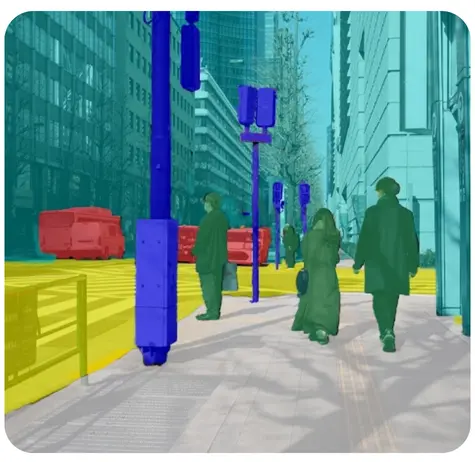
Image Annotation
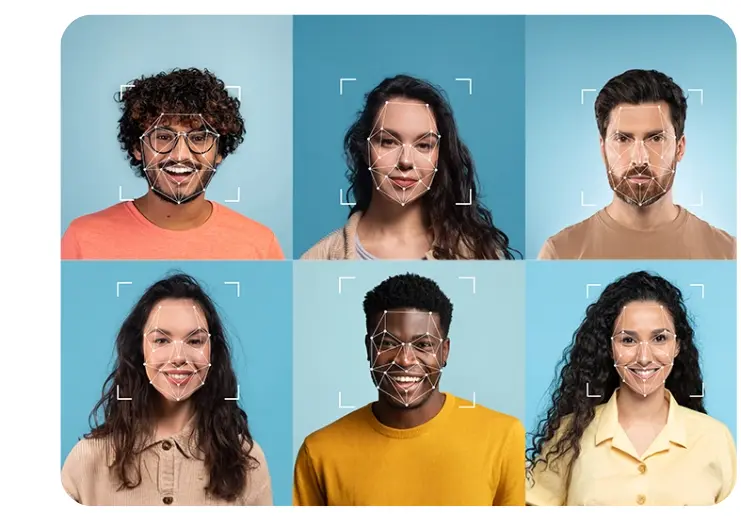
Video Annotation
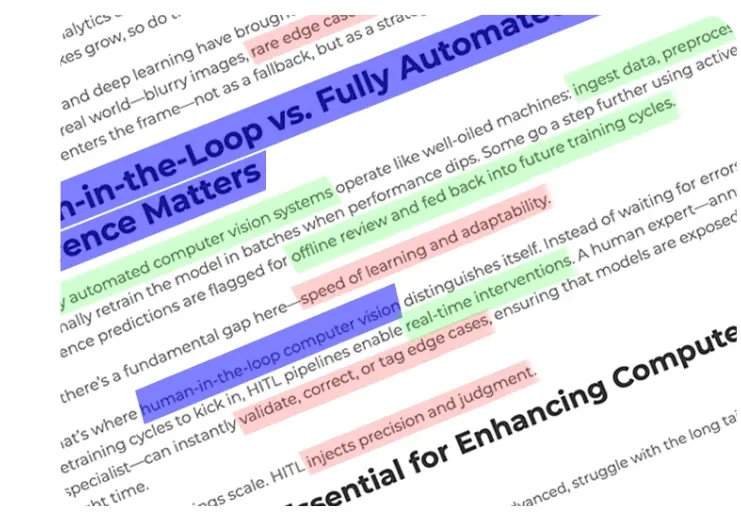
Text Annotation
Audio Annotation
3D / LiDAR Annotation
Synthetic Data QA
Types of Data Annotation We Support
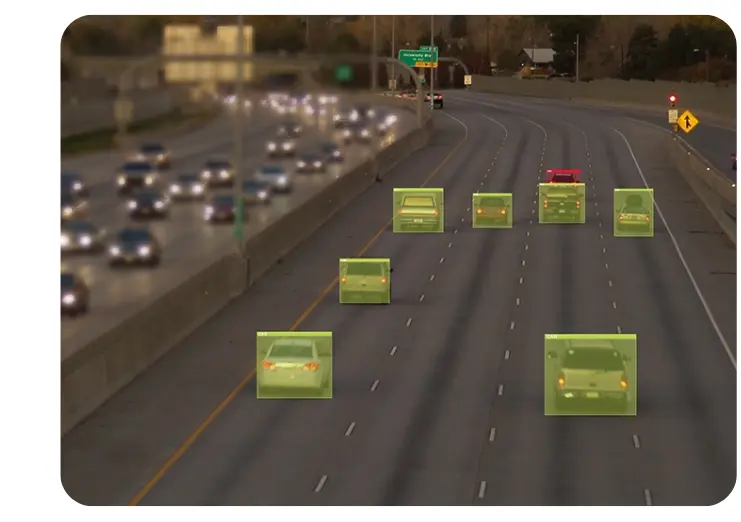
Bounding Box Annotation
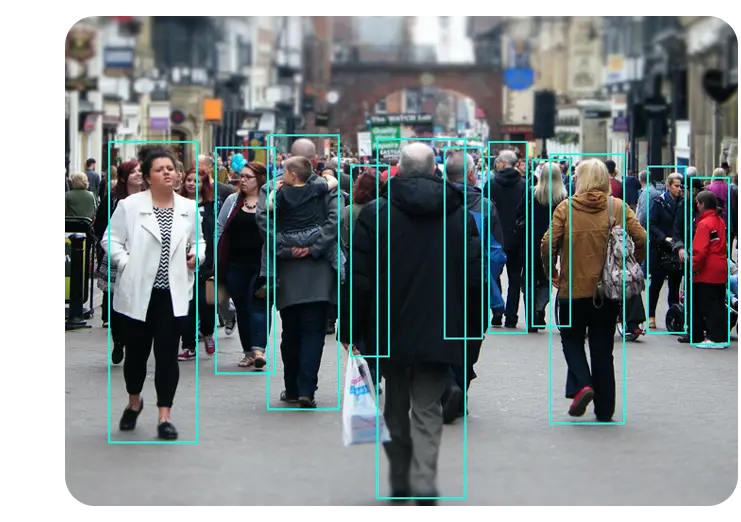
Bounding box annotation places rectangular frames around objects in images or video frames, enabling models to detect and localise objects within a scene. NextWealth’s annotation experts apply both 2D and 3D bounding boxes across diverse object classes like vehicles, pedestrians, products, faces, and more following clientspecific ontologies with interannotator agreement checks to ensure consistency at scale. As one of the most versatile annotation types, bounding boxes underpin object detection pipelines across virtually every computer vision application.
Video Annotation
Video annotation extends object detection and classification into the temporal dimension like tracking people, objects, and actions frame by frame across sequences that may span thousands of frames. Unlike static image annotation, video annotation requires maintaining object identity and label consistency through occlusion, reentry, and scene transitions. Our teams handle dense temporal labelling, action recognition tagging, trajectory mapping, and event classification making annotated video a reliable input for autonomous driving, surveillance, sports analytics, and realtime decisionmaking systems


Text Annotation
Text annotation encompasses named entity recognition (NER), sentiment tagging, intent classification, coreference resolution, and relation extraction the labelled datasets that power natural language processing (NLP) models. Our multilingual annotators support annotation in English, Hindi, Tamil, Telugu, and other Indian and global languages, enabling smarter automation in customer support, document processing, fraud detection, regulatory compliance, and conversational AI. We also support RLHF annotation workflows ranking and rating modelgenerated text responses to train and finetune large language models.
Audio Annotation
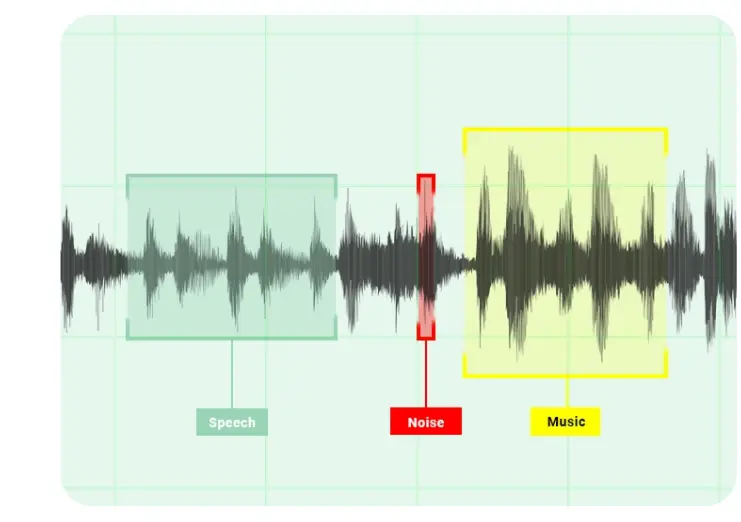
Audio annotation involves transcription, speaker identification, emotion and intonation tagging, sound event labelling, and language identification the training data backbone for voice assistants, call centre AI, speech recognition systems, and multilingual audio tools. Our annotators are trained to distinguish between speakers, capture pitch and emotional variation, and handle noisy, accented, or lowquality recordings expanding the conditions under which your voice AI can reliably perform.


3D / LiDAR Annotation
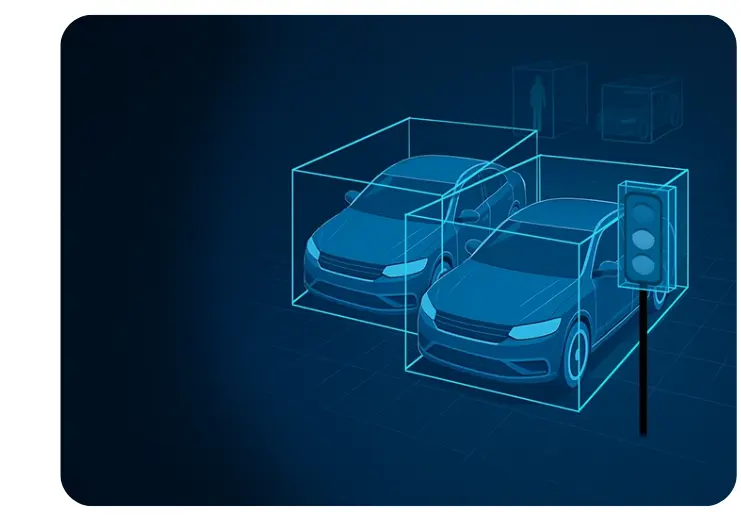
3D and LiDAR annotation labels point cloud data with cuboids, semantic segmentation, and depth mapping giving AI models a spatially accurate understanding of their environment. This is essential for autonomous vehicle perception stacks, industrial robotics, HD mapping, and drone navigation. Our annotators are trained in threedimensional spatial reasoning and specialised LiDAR tooling, supporting cuboid placement, 3D instance segmentation, and sequential frame tracking for moving objects across LiDAR sweeps.
Synthetic Data QA & Validation
Point cloud annotation labels three-dimensional spatial data captured by LiDAR sensors, assigning object categories like vehicles, cyclists, pedestrians, road furniture to clusters of 3D points. This is among the most technically demanding annotation types, requiring annotators trained in spatial reasoning and 3D visualisation tools. NextWealth supports cuboid annotation, 3D segmentation, and track-level labelling for sequential LiDAR frames essential for autonomous vehicle perception stacks and robotics navigation systems.

Annotation for Active Learning & RLHF Workflows
Modern ML development rarely follows a single-pass annotation model. NextWealth is built to support the iterative, feedback-driven pipelines that production AI teams actually use.

Active Learning Loops
In an active learning pipeline, your model identifies the samples it is least confident about and routes them for human annotation — prioritising labelling effort where it has the greatest impact on model improvement. NextWealth integrates into active learning workflows as the human-in-the-loop layer: receiving model-flagged samples, annotating them to your quality standard, and returning corrected labels to retrain the model. This dramatically reduces the total annotation volume required to achieve a given accuracy target.

RLHF Workflow Annotation
Reinforcement Learning from Human Feedback (RLHF) is the training methodology behind the most capable large language and vision models in production today. It requires human annotators to rank, rate, compare, and critique model outputs — shaping model behaviour toward human-preferred responses. NextWealth supports the full RLHF annotation stack: response ranking, pairwise comparison, quality scoring, and red-teaming annotation — for both text and multimodal models.
Annotation Platform & Tooling
NextWealth works with all major annotation platforms and can integrate with your existing tooling stack. We do not lock you into a proprietary tool — if you have an existing platform, our annotators are trained to work within it.

| Platform Type | Examples Supported |
|---|---|
| Enterprise annotation platforms | Labelbox, Appen, CloudFactory |
| Open-source tools | CVAT, Label Studio, Roboflow |
| Medical imaging platforms | ITK-SNAP, 3D Slicer, MD.ai |
| LiDAR / 3D tools | Supervisely, Scale Lidar, Cogniteam |
| Client-proprietary platforms | Full integration via API or custom workflow |
Data Security & Compliance
All annotation operations at NextWealth are conducted within a security framework aligned with ISO 27001 standards — the international benchmark for information security management.

Access Control
Role-based permissions; data accessible only to authorised annotators on a given project.
NDA Coverage
All annotators and operations staff are bound by non-disclosure agreements on every project.
Secure Data Transfer
Encrypted transfer protocols for all inbound and outbound data movements.
Audit Logging
Full traceability of who accessed, labelled, and reviewed each data asset across the project.
GDPR Alignment
Data handling practices designed for compliance with European and international data protection regulations.
No Data Retention
Client data is not stored beyond project scope unless explicitly agreed — your data stays yours.
Autonomous Vehicles & ADAS
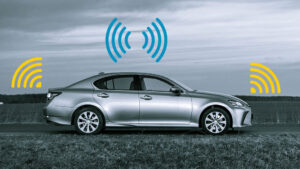
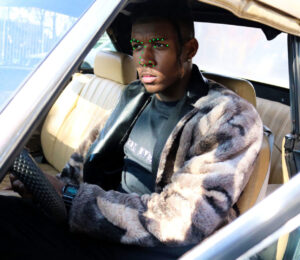
Data annotation enables autonomous vehicles to detect objects, pedestrians, traffic signals, and lane boundaries through annotated images, LiDAR point clouds, and incabin footage. We support ADAS features including emergency braking, driver monitoring, and gesture recognition like training vision systems to interpret complex, realworld road environments in real time, across weather conditions and geographies.
ECommerce & Retail

Annotation powers visual search, recommendation engines, and automated product cataloguing. Annotated product images help classify items by type, colour, texture, and style enhancing search accuracy, enriching product data, and driving better discovery experiences. Our active learning integration helps ecommerce AI teams continuously improve catalogue coverage without proportional growth in annotation spend.
Healthcare & Life Sciences

We annotate Xrays, MRIs, CT scans, and pathology slides using domaintrained annotators who understand clinical structures and medical labelling conventions. Annotators identify regions of interest tumours, fractures, lesions, organ boundaries enabling precise model training for diagnostics AI, computeraided detection, and medical research platforms. All medical annotation is conducted under strict data security and access control protocols.
Trust & Safety

Annotation supports facial recognition, KYC verification, liveness detection, and harmful content classification. Annotated datasets train models to identify policy violations, fraudulent behaviour, and identity anomalies keeping platforms secure, compliant, and usersafe at scale. We also support RLHFbased annotation for content moderation models, where human reviewers rate and rank model decisions to improve policy alignment.
Industrial & Manufacturing

Annotation enables defect detection and visual quality inspection by labelling surface anomalies, component misplacements, and process errors in industrial imagery. Annotated datasets power quality control systems, robotic assembly guidance, and predictive maintenance tools reducing downtime and ensuring production consistency.
Media, Security & Surveillance
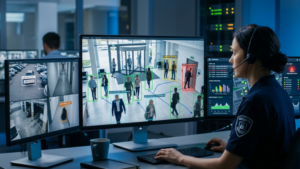
Video annotation supports individual tracking, anomaly detection, crowd monitoring, and object recognition in security footage. Our temporal annotation workflows train AI to detect intrusions, assess risk, and monitor environments in real time fuelling surveillance systems, smart city infrastructure, and content moderation platforms.



I am really happy at all the great things we have been able to achieve in the past 1 year. The relationship now has a solid foundation, and I am sure NextWealth will continue to be a formidable partner going ahead, bringing a delightful experience for our customers.
NextWealth has been an invaluable partner to us, significantly accelerating our growth by handling critical data operations and providing strategic insights.
NextWealth’s hard work and dedication are truly making a difference, streamlining our processes significantly. We really appreciate it!
My experience with NextWealth has been wonderful. The diligent team consistently delivers on time with a focus on quality. Their innovation-driven mindset fosters a win-win situation for both teams.
I am happy with the improvement in the performance. I have seen positive improvement, and we have a long way to go.
NextWealth’s in-depth analysis helped us pinpoint exactly what needs to be done to address the issues.
With excellence in Quality, Cost, and TAT—key pillars of any operation—NextWealth sets a benchmark for operational efficiency and beyond.
We have experienced significant growth—a success we could not have achieved without the expert support, hard work, and commitment of NextWealth.

Evaluating AI Agents in Production: Why Automated Metrics Fail Without Human-in-the-Loop
9 mins read


The Invisible Risk in Your AI Supply Chain: Why Crowdsourced Data Is an Enterprise Liability
9 mins read


