

BFSI
Human-in-the-loop verification, document processing, and risk-review solutions that help financial institutions move faster, stay compliant, and earn customer trust at scale.

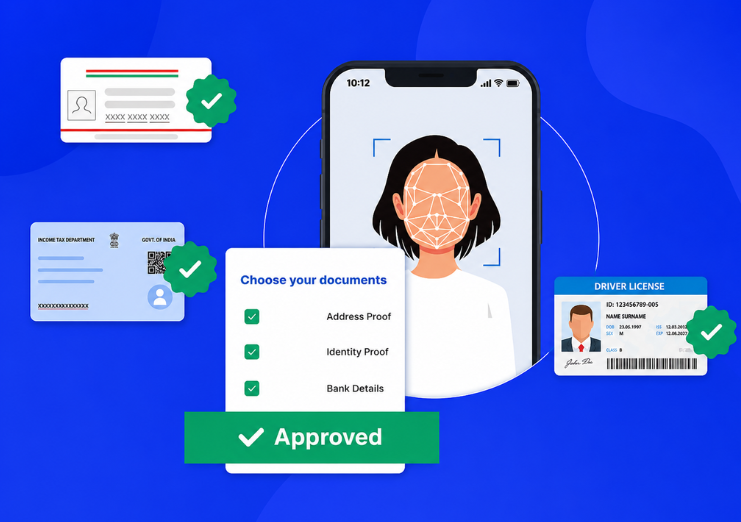
KYC & Identity Verification
We verify customer identities against submitted documents, matching names, photos, addresses, and dates against official records and flag mismatches, tampering, or expired credentials. This shortens onboarding time while keeping every approval defensible under regulatory review.
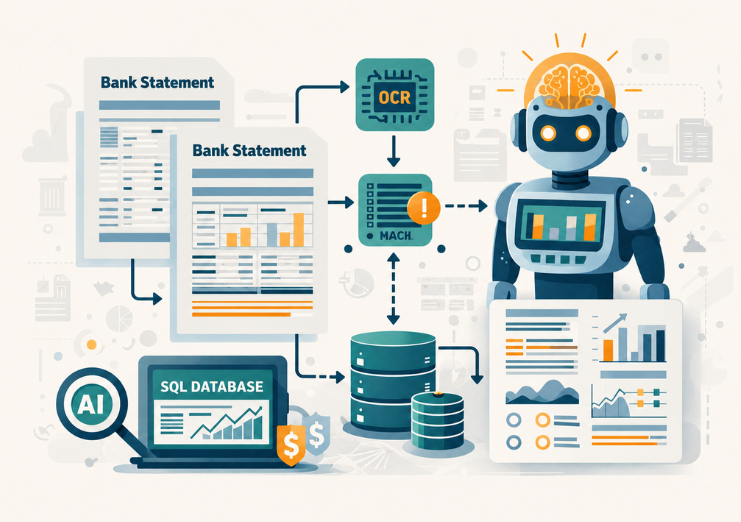
Document Data Extraction & Validation
We extract structured data from financial documents like loan applications, bank statements, pay slips, tax records, and insurance forms and validate each field against the source. This turns unstructured paperwork into clean, decision-ready data without the errors that derail downstream processing.


Transaction & Fraud Review
Automated systems flag anomalies, but they generate false positives that frustrate genuine customers and false negatives that let fraud through. Our analysts review flagged transactions, confirm or clear them in context, and feed those decisions back into your models, improving precision over time.
AML & Sanctions Screening Support
We review alerts generated by your monitoring and screening systems, dispositioning matches against watchlists and adverse-media signals so your compliance team focuses only on genuine risk. Every decision is logged with a clear rationale for audit trails.

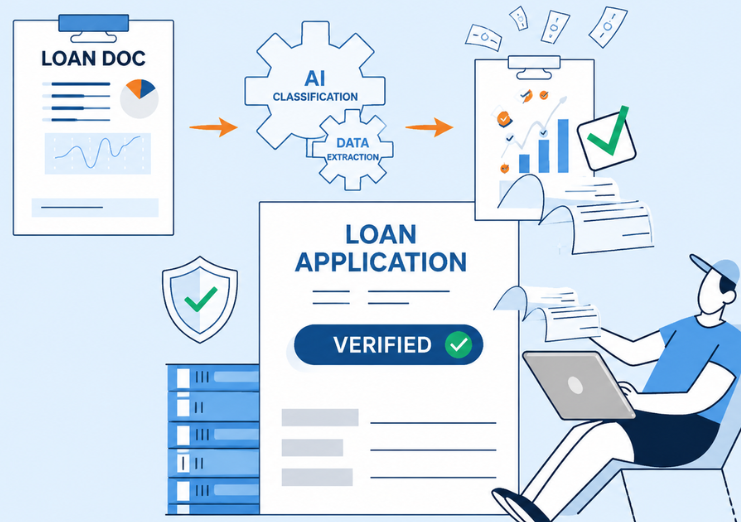
Loan & Claims Document Processing
We classify, index, and verify the document packages behind lending and insurance decisions like checking completeness, consistency, and authenticity. This reduces turnaround time on approvals and claims while keeping a clean record of every check performed.
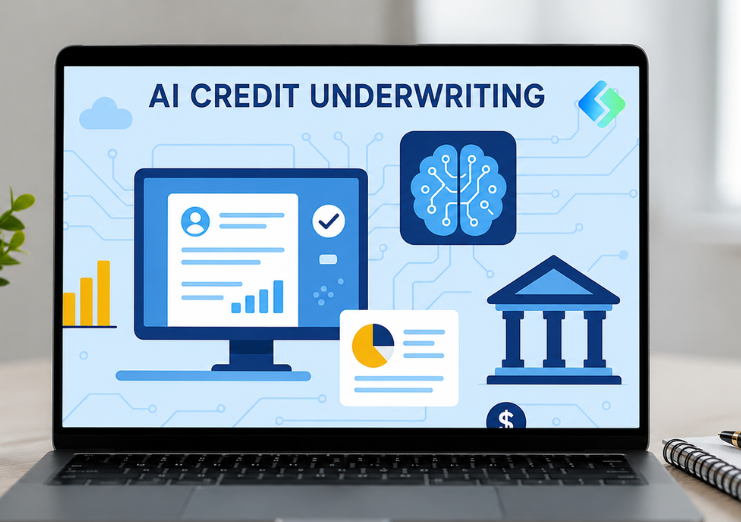
Credit & Underwriting Data Preparation
We assemble and validate the data inputs underwriters rely on, normalising values across inconsistent source formats and resolving discrepancies. Clean inputs mean faster, more confident credit decisions.

Customer Communication Review
We review customer-facing communications, support interactions, and submitted content to flag complaints, vulnerability signals, mis-selling risk, and policy breaches before they escalate, protecting both the customer and the institution.
Training Data for Financial AI Models
We provide the high-quality labelled data that powers your in-house models like document classification, intent detection, entity extraction, and risk scoring so your automation learns from accurate, expert-reviewed examples.
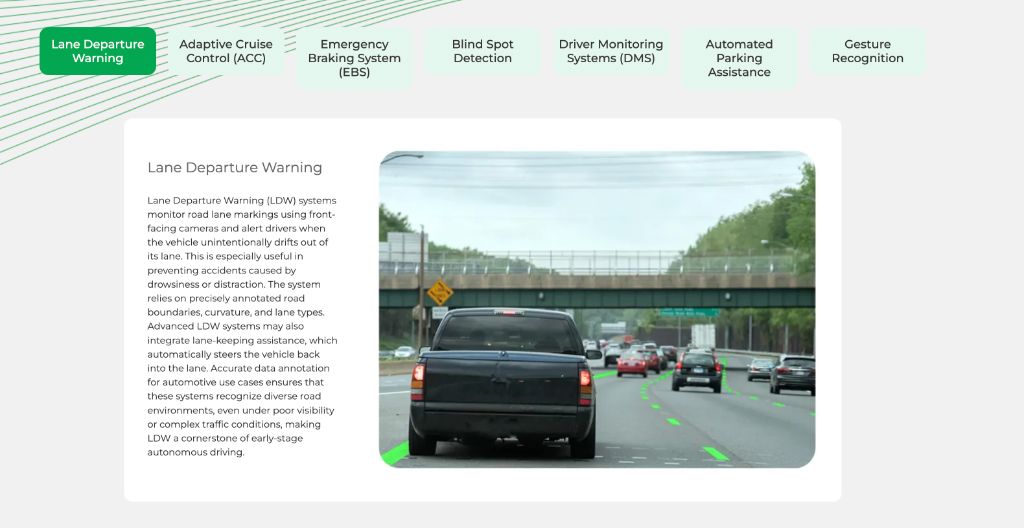
Lane Departure Warning
Lane Departure Warning (LDW) systems monitor road lane markings using front-facing cameras and alert drivers when the vehicle unintentionally drifts out of its lane. This is especially useful in preventing accidents caused by drowsiness or distraction. The system relies on precisely annotated road boundaries, curvature, and lane types. Advanced LDW systems may also integrate lane-keeping assistance, which automatically steers the vehicle back into the lane. Accurate data annotation for automotive use cases ensures that these systems recognize diverse road environments, even under poor visibility or complex traffic conditions, making LDW a cornerstone of early-stage autonomous driving.

Adaptive Cruise Control (ACC)
Adaptive Cruise Control enhances traditional cruise control by automatically adjusting the vehicle’s speed to maintain a safe following distance from the vehicle ahead. It uses radar, LiDAR, and camera data to detect the relative speed and distance of other vehicles. Annotation of traffic participants, road context, and distance measurement objects is critical in training these models. ACC improves driver convenience and highway safety, especially during long drives or in stop-and-go traffic. As a part of advanced driver assistance systems, its accuracy depends heavily on consistent and scalable data labeling for autonomous vehicles.

Emergency Braking System (EBS)
Emergency Braking Systems detect imminent collisions with vehicles, pedestrians, or obstacles and apply brakes autonomously to avoid or minimize impact. These systems use a fusion of LiDAR, radar, and camera inputs. Accurate data annotation for autonomous driving is essential to detect objects at various angles and speeds in real time. Key annotations include bounding boxes for moving and static objects, trajectory prediction, and environmental labeling. EBS contributes to reduced accident severity, particularly in urban settings, and is a key safety feature that pushes automotive systems toward full autonomy.

Blind Spot Detection
Blind Spot Detection systems monitor areas alongside and just behind the vehicle that drivers can’t easily see. Using side-mounted radar sensors and rear-facing cameras, these systems alert drivers to approaching vehicles in adjacent lanes. Annotating training data for such systems includes lane markings, vehicle proximity, sensor zones, and occlusion scenarios. With real-time warnings, Blind Spot Detection enhances safety during lane changes and merges. It’s especially critical for larger vehicles and highway driving, and relies on high-quality data labeling for automotive safety applications.

Driver Monitoring Systems (DMS)
Driver Monitoring Systems use in-cabin cameras and AI to assess driver attentiveness, fatigue, and distraction. These systems track head position, eye movement, blink rate, and gaze direction. Training such models requires detailed annotation of facial landmarks, expressions, and micro-behaviors under varying lighting conditions. DMS plays a pivotal role in reducing accidents due to human error and is mandated in many global safety standards. At NextWealth, we specialize in data annotation for automotive DMS, ensuring models perform accurately across geographies and driver demographics.

Automated Parking Assistance
Automated Parking Assistance helps drivers park by detecting open spaces and maneuvering the vehicle using sensors and steering algorithms. It involves obstacle detection, path planning, and real-time motion control. Annotation tasks include segmenting parking slots, identifying curbs, pedestrians, and dynamic objects. The solution uses a combination of camera and ultrasonic sensor data. High-quality annotations ensure parking systems operate safely in tight or complex environments, improving both convenience and vehicle safety. It’s an essential module in the progression toward fully autonomous vehicles.

Gesture Recognition
Gesture Recognition allows drivers or passengers to interact with the vehicle’s systems through hand or head movements, enabling touch-free controls for infotainment, AC, or calls. This system relies on in-cabin cameras and AI trained with annotated gesture datasets—including hand position, motion path, and intent classification. It enhances user experience and safety by reducing distractions. As part of next-gen advanced driver assistance systems, this feature depends on precise human-in-the-loop data annotation to recognize varied gestures across cultures, lighting, and driver postures.
Accelerating Digital Onboarding

A digital lender was losing applicants to slow, manual identity checks during onboarding. By deploying KYC & Identity Verification with human review on edge cases, we cleared straightforward approvals quickly and escalated only genuine exceptions.
The Result: A 40% reduction in onboarding turnaround time, with approval decisions that held up under regulatory audit.
Sharpening Fraud Detection Precision

A financial institution’s compliance team was overwhelmed by a high volume of low-value AML alerts. We reviewed and dispositioned alerts against watchlists and adverse-media signals, escalating only substantiated matches.
The Result: Compliance analysts redirected to genuine risk, with a logged rationale behind every cleared and escalated alert.
Streamlining Claims Processing

An insurer faced backlogs from inconsistent, incomplete claim document packages. We applied Loan & Claims Document Processing to classify, verify, and index every submission before it reached adjusters.
The Result: Faster claim cycle times and a clean, complete record for every decision.
Strengthening AML Alert Disposition

A financial institution’s compliance team was overwhelmed by a high volume of low-value AML alerts. We reviewed and dispositioned alerts against watchlists and adverse-media signals, escalating only substantiated matches.
The Result: Compliance analysts redirected to genuine risk, with a logged rationale behind every cleared and escalated alert.
Certifications & Compliance
Financial institutions cannot afford to take a partner’s security on trust alone. NextWealth’s operations are independently certified against the standards that matter most in regulated environments, so your vendor due diligence, procurement reviews, and audit requirements are met before the conversation starts.

ISO 27001:2022
Information Security Management System, governing how we protect and manage sensitive data end to end.
SOC 2
Independent attestation of our security, availability, processing integrity, confidentiality, and privacy controls.
PCI DSS v4.0
Compliance for the secure handling of cardholder and payment data.
HIPAA
Safeguards for sensitive personal and health-related information.
GDPR
Adherence to global data-privacy obligations for personal data.
ISO 9001:2015
Quality Management System underpinning consistent, accurate delivery.