
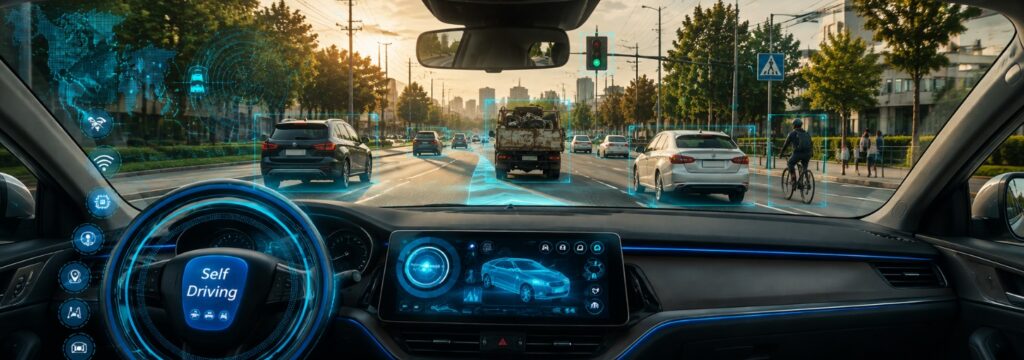
AI Data Solutions for the Automotive & Autonomous Mobility Industry
Your autonomous models are only as safe as the data that trains them.

Types of Services We Offer
We provide end-to-end perception data support designed to accelerate development and de-risk validation across every level of autonomy.
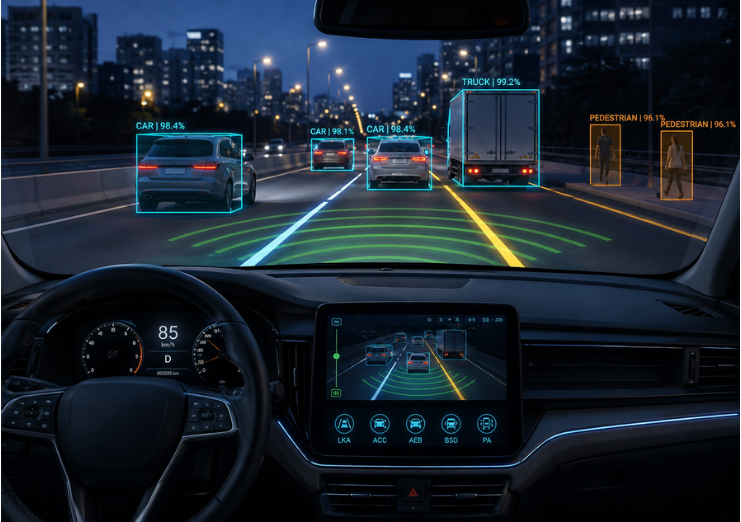
ADAS Data Annotation
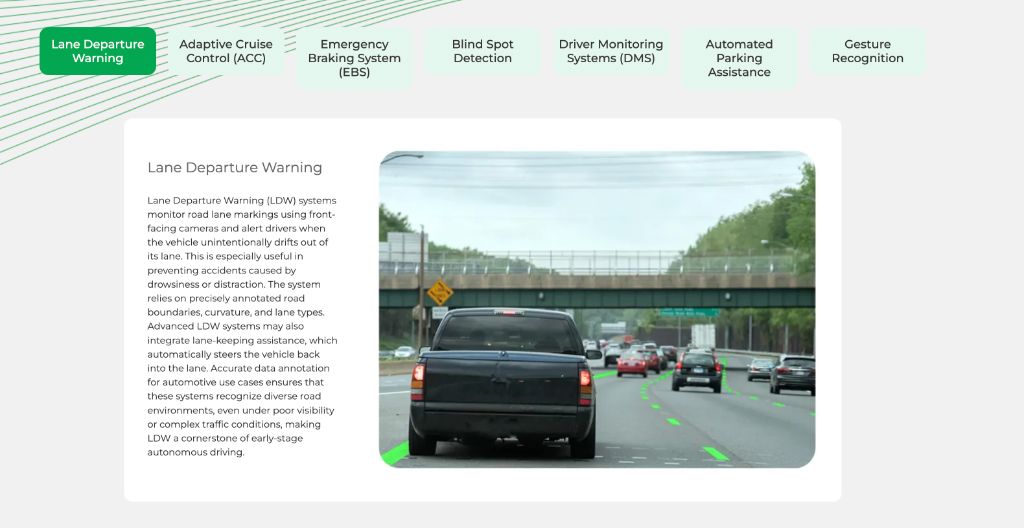
We label the scenarios behind every assistance feature, lane markings, traffic participants, distances, and trajectories for LDW, ACC, AEB, blind-spot, and parking systems. Precise, consistent ground truth is what turns a feature that nags into one that drivers trust.
Autonomous Driving (AV) Perception Data
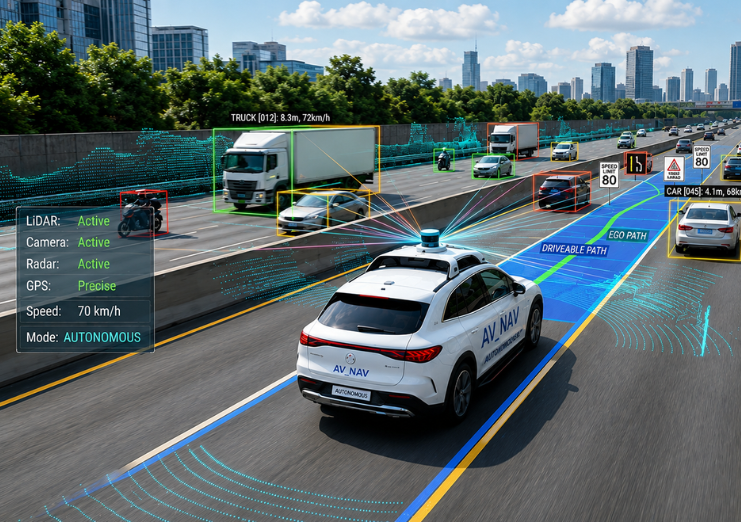
From Level 2+ to Level 3 and beyond, we build the near-exhaustive, ODD-specific datasets that conditional automation demands, covering normal operation, rare events, and the minimum-risk manoeuvres that safety cases depend on.
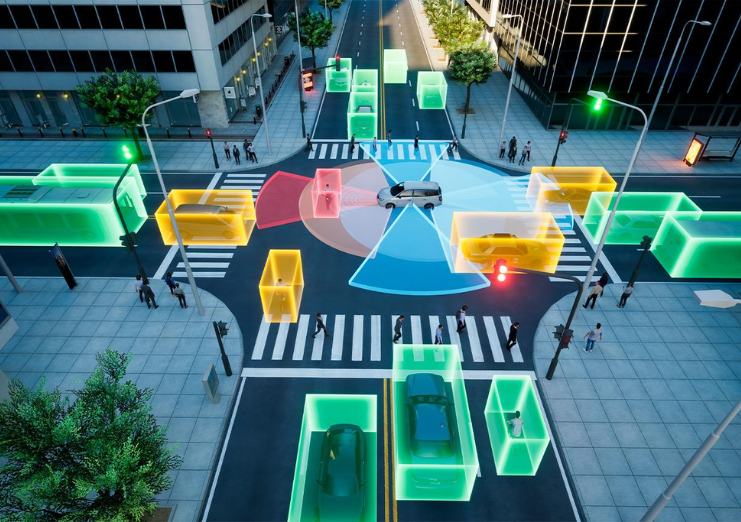
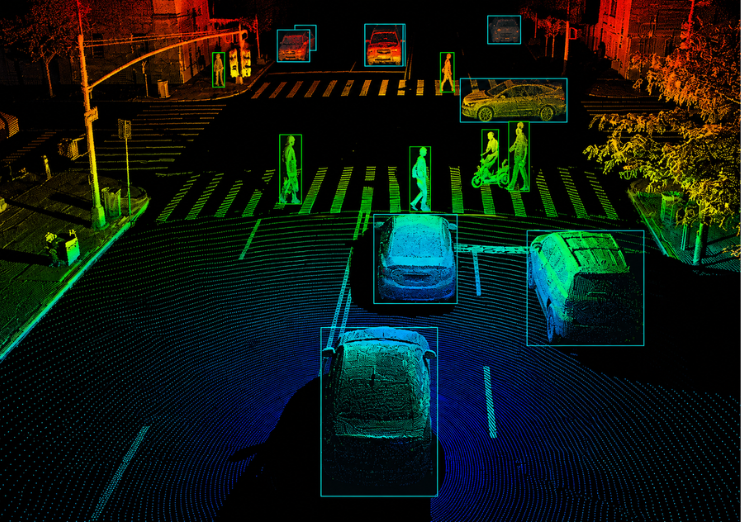
LiDAR & 3D Point Cloud Annotation
We deliver high-precision cuboids, segmentation, and object tracking across 3D point clouds, giving your perception stack the geometric accuracy it needs for distance, depth, and spatial reasoning.
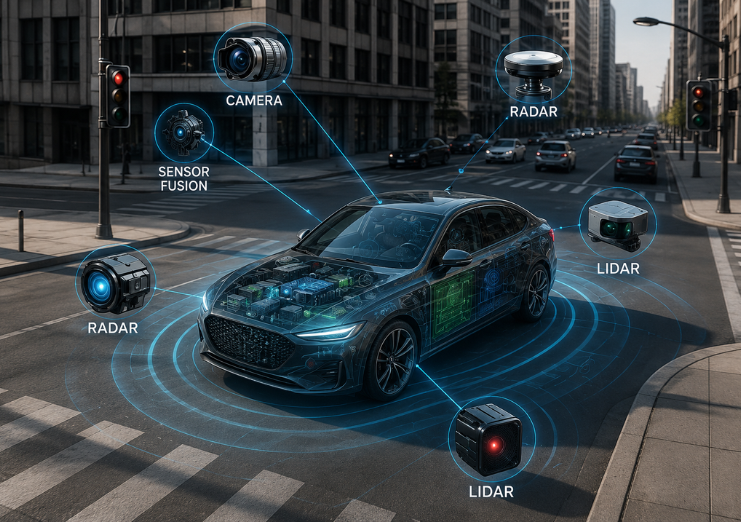
Sensor Fusion Annotation
Camera, radar, LiDAR, and ultrasonic each see the world differently. We synchronise them at the frame level and maintain consistent object identities across 2D and 3D, so your fusion models train on coherent, cross-verified ground truth.
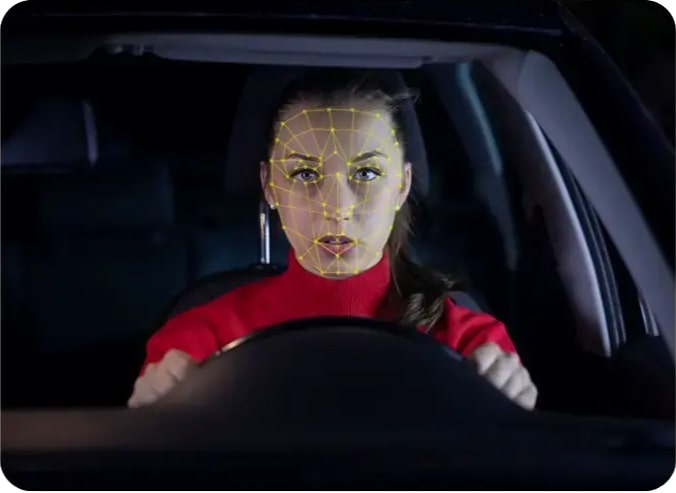
Driver & In-Cabin Monitoring (DMS)
We annotate facial landmarks, gaze, head pose, and micro-behaviours under varied lighting and demographics, powering driver-attention, drowsiness, and distraction systems that meet global safety mandates.
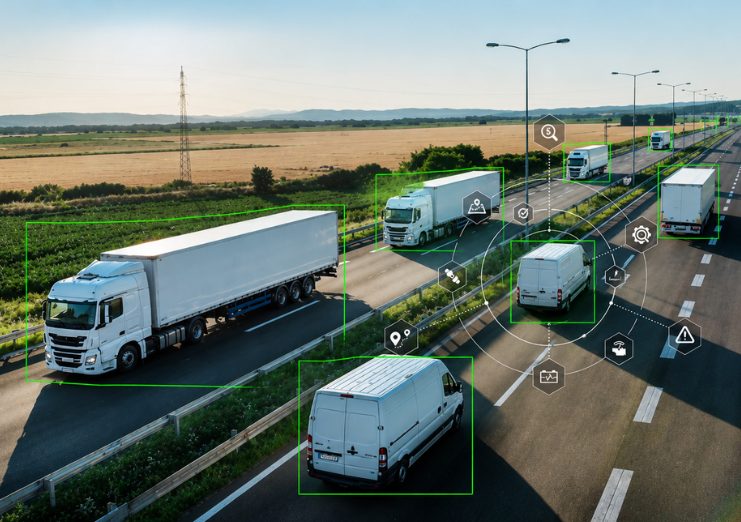
Video Annotation & Scenario Mining
We process long-duration driving footage to track objects over time and surface the rare, high-value scenarios buried in fleet logs, building the long-tail coverage that benchmark datasets miss.
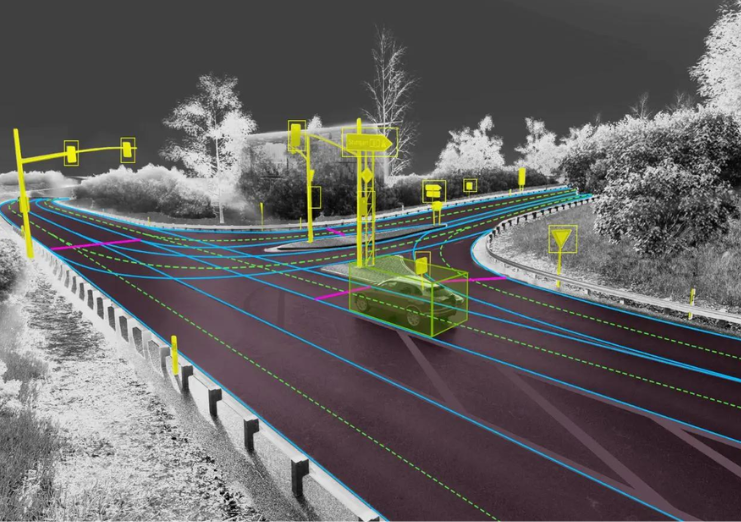
HD Mapping & Lane-Level Annotation
We support high-definition map creation with lane-level geometry, road furniture, signage, and semantic labelling, the foundational layer for localisation and route-level decision-making.
Edge-Case & Adverse-Condition Datasets
Night, rain, fog, glare, occlusion, and unusual road actors are where perception fails. We curate, mine, and oversample these conditions, with human verification where single sensors fall short.

Safety Testing & Regulatory Ground Truth
We deliver liability-grade, auditable ground truth for scenario-based safety assessment, supporting NCAP rating KPIs (Euro, Global, Bharat NCAP) and UNECE type-approval evidence (R152 AEB, R157 ALKS, and related regulations).
Lane Departure Warning
Lane Departure Warning (LDW) systems monitor road lane markings using front-facing cameras and alert drivers when the vehicle unintentionally drifts out of its lane. This is especially useful in preventing accidents caused by drowsiness or distraction. The system relies on precisely annotated road boundaries, curvature, and lane types. Advanced LDW systems may also integrate lane-keeping assistance, which automatically steers the vehicle back into the lane. Accurate data annotation for automotive use cases ensures that these systems recognize diverse road environments, even under poor visibility or complex traffic conditions, making LDW a cornerstone of early-stage autonomous driving.

Adaptive Cruise Control (ACC)
Adaptive Cruise Control enhances traditional cruise control by automatically adjusting the vehicle’s speed to maintain a safe following distance from the vehicle ahead. It uses radar, LiDAR, and camera data to detect the relative speed and distance of other vehicles. Annotation of traffic participants, road context, and distance measurement objects is critical in training these models. ACC improves driver convenience and highway safety, especially during long drives or in stop-and-go traffic. As a part of advanced driver assistance systems, its accuracy depends heavily on consistent and scalable data labeling for autonomous vehicles.

Emergency Braking System (EBS)
Emergency Braking Systems detect imminent collisions with vehicles, pedestrians, or obstacles and apply brakes autonomously to avoid or minimize impact. These systems use a fusion of LiDAR, radar, and camera inputs. Accurate data annotation for autonomous driving is essential to detect objects at various angles and speeds in real time. Key annotations include bounding boxes for moving and static objects, trajectory prediction, and environmental labeling. EBS contributes to reduced accident severity, particularly in urban settings, and is a key safety feature that pushes automotive systems toward full autonomy.

Blind Spot Detection
Blind Spot Detection systems monitor areas alongside and just behind the vehicle that drivers can’t easily see. Using side-mounted radar sensors and rear-facing cameras, these systems alert drivers to approaching vehicles in adjacent lanes. Annotating training data for such systems includes lane markings, vehicle proximity, sensor zones, and occlusion scenarios. With real-time warnings, Blind Spot Detection enhances safety during lane changes and merges. It’s especially critical for larger vehicles and highway driving, and relies on high-quality data labeling for automotive safety applications.

Driver Monitoring Systems (DMS)
Driver Monitoring Systems use in-cabin cameras and AI to assess driver attentiveness, fatigue, and distraction. These systems track head position, eye movement, blink rate, and gaze direction. Training such models requires detailed annotation of facial landmarks, expressions, and micro-behaviors under varying lighting conditions. DMS plays a pivotal role in reducing accidents due to human error and is mandated in many global safety standards. At NextWealth, we specialize in data annotation for automotive DMS, ensuring models perform accurately across geographies and driver demographics.

Automated Parking Assistance
Automated Parking Assistance helps drivers park by detecting open spaces and maneuvering the vehicle using sensors and steering algorithms. It involves obstacle detection, path planning, and real-time motion control. Annotation tasks include segmenting parking slots, identifying curbs, pedestrians, and dynamic objects. The solution uses a combination of camera and ultrasonic sensor data. High-quality annotations ensure parking systems operate safely in tight or complex environments, improving both convenience and vehicle safety. It’s an essential module in the progression toward fully autonomous vehicles.

Gesture Recognition
Gesture Recognition allows drivers or passengers to interact with the vehicle’s systems through hand or head movements, enabling touch-free controls for infotainment, AC, or calls. This system relies on in-cabin cameras and AI trained with annotated gesture datasets—including hand position, motion path, and intent classification. It enhances user experience and safety by reducing distractions. As part of next-gen advanced driver assistance systems, this feature depends on precise human-in-the-loop data annotation to recognize varied gestures across cultures, lighting, and driver postures.
Highway & Urban ADAS Calibration
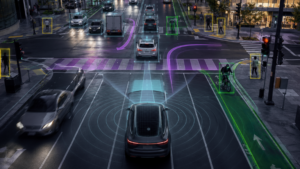
Labeling thousands of hours of real-world driving footage across diverse global geographies to train models on lane-merging, pedestrian crossings, and complex urban traffic flow variations.
Corner-Case & Anomaly Detection
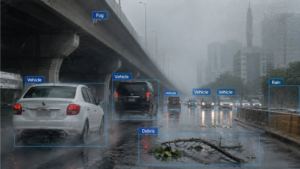
Identifying, curating, and tagging rare road anomalies, such as unexpected debris, erratic animal movements, or extreme weather conditions (heavy snow, torrential rain, or lens flare), to accelerate model training for critical edge cases.
HD Mapping & Localization:
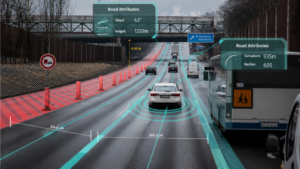
Annotating highly localized road features, including landmarks, traffic signs, overpasses, and structural boundaries, to assist vehicles in centimeter-level self-localization within HD maps.
Fleet-Wide Video Analytics

Processing continuous data streams from commercial delivery or ride-hailing fleets to map real-time road conditions, analyze near-miss accidents, and train commercial telematics models.
In-Cabin Passenger Safety & Robotics

Structuring multi-modal datasets that help robotaxis and autonomous shuttles recognize driver fatigue, sudden medical emergencies, or left-behind items.




I am really happy at all the great things we have been able to achieve in the past 1 year. The relationship now has a solid foundation, and I am sure NextWealth will continue to be a formidable partner going ahead, bringing a delightful experience for our customers.
NextWealth has been an invaluable partner to us, significantly accelerating our growth by handling critical data operations and providing strategic insights.
NextWealth’s hard work and dedication are truly making a difference, streamlining our processes significantly. We really appreciate it!
My experience with NextWealth has been wonderful. The diligent team consistently delivers on time with a focus on quality. Their innovation-driven mindset fosters a win-win situation for both teams.
I am happy with the improvement in the performance. I have seen positive improvement, and we have a long way to go.
NextWealth’s in-depth analysis helped us pinpoint exactly what needs to be done to address the issues.
With excellence in Quality, Cost, and TAT—key pillars of any operation—NextWealth sets a benchmark for operational efficiency and beyond.
We have experienced significant growth—a success we could not have achieved without the expert support, hard work, and commitment of NextWealth.