

Push the Boundaries of Generative AI with Expert Human Insight
Gen AI annotation is the process of labeling, evaluating, and reviewing the outputs of generative AI models, including prompt response pairs, LLM outputs, and model generated content, to improve accuracy, safety, and alignment. NextWealth provides Gen AI annotation services combining human in the loop (HITL) review, RLHF annotation, SFT dataset creation, DPO pair labeling, and safety red teaming for enterprise LLM training and alignment programs. Our Gen AI annotation teams are domain trained, ISO 27001, HIPAA, PCIDSS, and SOC2 certified, with a 99% accuracy SLA across all engagements. Our 5,000+ annotators support Gen AI annotation workflows for enterprise LLM programs including foundation model training, instruction tuning, and alignment evaluation.

Our Areas of Expertise
Data Collection
Prompt Creation
High-quality prompts are the raw material of every GenAI training pipeline. Our linguists, domain experts, and prompt engineers craft diverse, adversarial, and instruction-following prompts across verticals covering single-turn, multi-turn, and chain-of-thought formats. We design prompts that stress-test model reasoning, expose failure modes, and build robust instruction-following datasets for both general-purpose and domain-specific LLMs.

Validation of Synthetic Data
Synthetic data accelerates model development but only when it’s reliable. Our teams validate AI-generated datasets for factual accuracy, logical consistency, format correctness, and distributional coverage, ensuring synthetic data meets the quality bar required for fine-tuning and model evaluation without introducing hallucinations or artifacts.

Code Generation
We collect, annotate, and evaluate code across Python, JavaScript, SQL, and other languages supporting training datasets for code-generation models and copilots. Tasks include code completion, bug detection, docstring generation, and unit test creation, all reviewed by human experts for correctness and style consistency.

Data Collection for Locales
GenAI models fail silently when they lack cultural and linguistic depth. NextWealth collects and curates training data across 50+ languages and regional locales capturing dialectal variation, cultural nuance, and domain-specific terminology that generic datasets miss. This is critical for building multilingual LLMs and culturally aware GenAI applications.

Data Annotation
Text Annotation
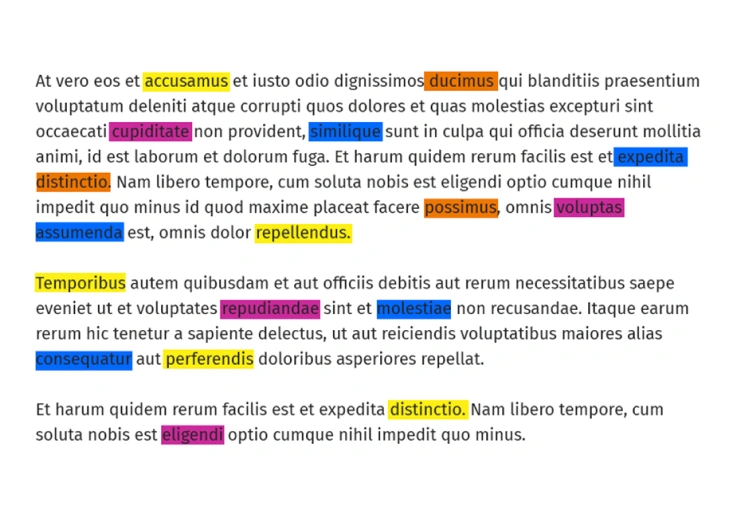
From named entity recognition and intent classification to semantic role labeling and discourse annotation, our text annotation teams support the full range of NLP training requirements. For reasoning models, we provide chain-of-thought (CoT) annotation labeling not just the correct answer but the intermediate reasoning steps that teach models how to think through complex problems systematically.
Speech Annotation
We provide transcription, speaker diarization, emotion tagging, accent labeling, and prosody annotation for speech and audio datasets supporting voice-enabled GenAI applications, conversational AI, and multimodal models that process audio inputs alongside text.
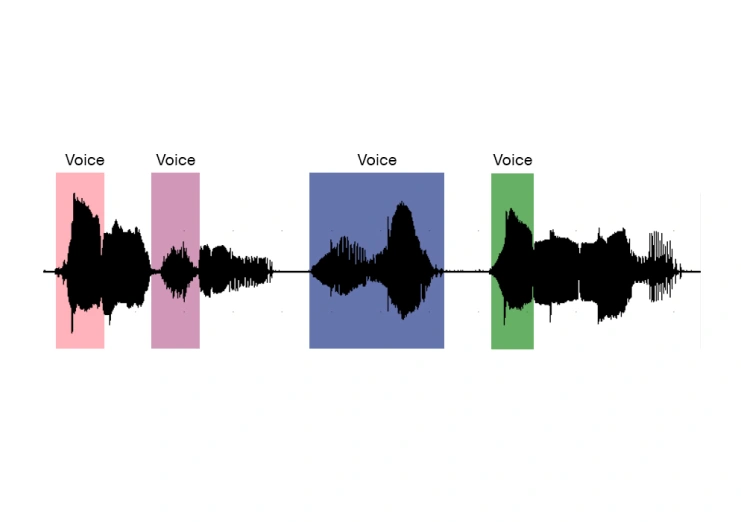
Image and Video Description and Captioning
Multimodal training requires rich, accurate, and contextually grounded descriptions of visual content. Our teams generate detailed image captions, video event descriptions, and visual question-answer pairs that train vision-language models (VLMs) to reason accurately across image and text modalities. We also annotate multimodal consistency verifying that model outputs correctly reflect the visual content they describe.

Toxic Language Identification
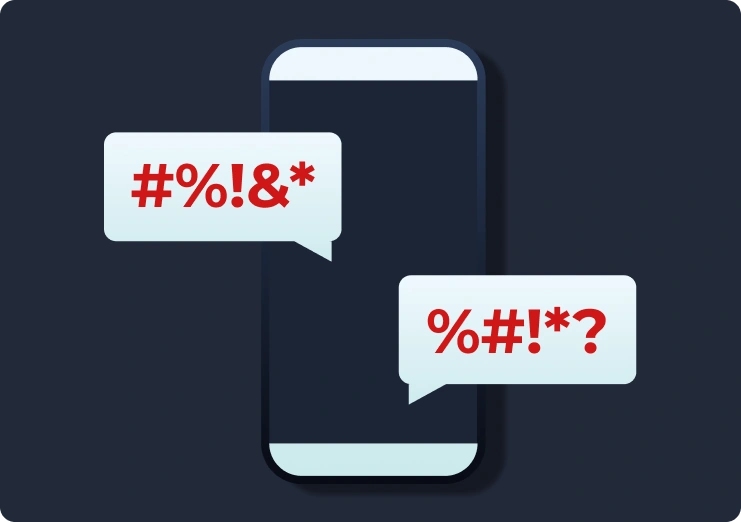
Our Trust and Safety specialists identify harmful, toxic, biased, and policy-violating content across text, images, and multimodal inputs building the safety training datasets that underpin content moderation classifiers, safety fine-tuning, and Constitutional AI workflows.
Data Evaluation
Prompt Classification and Augmentation
We classify prompts by intent, difficulty, domain, and risk level and augment existing prompt libraries with paraphrases, adversarial variants, and edge cases. This builds more robust and diverse evaluation benchmarks that expose model weaknesses before deployment.

Model Output Evaluation — RLHF, SFT & DPO
This is the core of GenAI alignment. Our human evaluators conduct:
- Supervised Fine-Tuning (SFT): Creating high-quality demonstration data — expert-written responses that teach models the desired output format, tone, and reasoning style.
- Reinforcement Learning from Human Feedback (RLHF): Human preference ranking of model outputs, providing the reward signal that fine-tunes models toward outputs humans genuinely prefer.
- Direct Preference Optimisation (DPO): Generating structured preference pairs — chosen vs. rejected responses — that train models through direct comparison without a separate reward model, enabling faster and more stable alignment.

Hallucination Correction
Hallucination is the most damaging failure mode in production GenAI. Our evaluators identify factual errors, unsupported claims, and confabulated references in model outputs — annotating corrections and building the targeted fine-tuning datasets that reduce hallucination rates over time. This includes grounded vs. ungrounded claim classification and retrieval-augmented generation (RAG) output validation.

Red Teaming and Adversarial Testing
Before your model reaches users, it needs to face adversarial inputs designed to expose safety failures, jailbreaks, prompt injections, and harmful output generation. NextWealth’s red teaming teams systematically probe model behavior across risk categories — generating adversarial prompts, documenting failure modes, and producing the safety fine-tuning data needed to patch vulnerabilities. This is an essential step for any GenAI deployment in regulated or public-facing environments.

Multimodal Consistency Evaluation
For vision-language models and multimodal GenAI applications, we evaluate whether model outputs are faithful to their visual, audio, or document inputs — catching cross-modal hallucinations, factual mismatches, and alignment failures that text-only evaluation pipelines miss.

Large Language Model Fine-Tuning
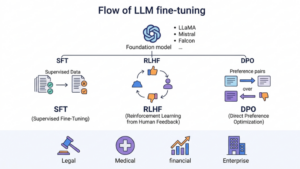
Supporting SFT, RLHF, and DPO pipelines for teams fine-tuning foundation models including open-source models like LLaMA, Mistral, and Falcon across domain-specific applications in legal, medical, financial, and enterprise knowledge management.
Conversational AI and Chatbots
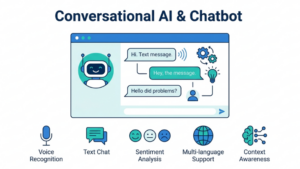
Building high-quality multi-turn dialogue datasets, evaluating response quality, and aligning chatbot outputs to brand voice, safety policies, and user intent for customer service, internal assistants, and consumer-facing applications..
Code Generation Models and Copilots
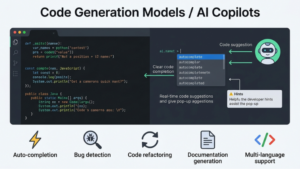
Collecting, annotating, and evaluating code datasets across languages and frameworks supporting the development of AI coding assistants that generate correct, secure, and well-documented code.
Multimodal AI Applications

Providing image captioning, visual QA annotation, and cross-modal consistency evaluation for vision-language models powering document understanding, medical imaging AI, retail visual search, and autonomous systems.
Content Moderation and Trust and Safety
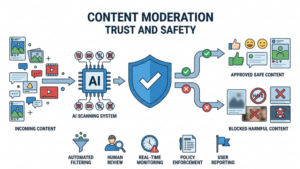
Identifying harmful, toxic, and policy-violating content at scale building the safety classifiers and fine-tuning datasets that keep GenAI platforms safe for diverse user communities.
Retrieval-Augmented Generation (RAG) Systems
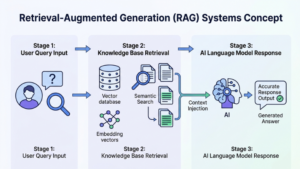
Validating that RAG model outputs are grounded in retrieved source documents annotating factual accuracy, citation correctness, and ungrounded claim detection for enterprise knowledge management and search applications.
AI Agents and Reasoning Models
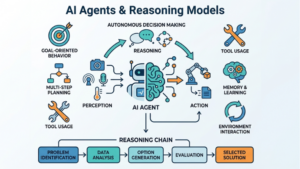
Providing chain-of-thought annotation, tool-use trajectory labeling, and multi-step reasoning evaluation for AI agents teaching models to decompose complex tasks, use tools correctly, and reason transparently.






I am really happy at all the great things we have been able to achieve in the past 1 year. The relationship now has a solid foundation, and I am sure NextWealth will continue to be a formidable partner going ahead, bringing a delightful experience for our customers.
NextWealth has been an invaluable partner to us, significantly accelerating our growth by handling critical data operations and providing strategic insights.
NextWealth’s hard work and dedication are truly making a difference, streamlining our processes significantly. We really appreciate it!
My experience with NextWealth has been wonderful. The diligent team consistently delivers on time with a focus on quality. Their innovation-driven mindset fosters a win-win situation for both teams.
I am happy with the improvement in the performance. I have seen positive improvement, and we have a long way to go.
NextWealth’s in-depth analysis helped us pinpoint exactly what needs to be done to address the issues.
With excellence in Quality, Cost, and TAT—key pillars of any operation—NextWealth sets a benchmark for operational efficiency and beyond.
We have experienced significant growth—a success we could not have achieved without the expert support, hard work, and commitment of NextWealth.
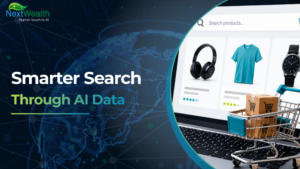
Bridging the Relevance Gap: How AI Data Services Optimize Search and Discovery for Global Marketplaces
7 mins read
Latest Update
The Next Frontier of Data Annotation: Structuring the Complex Pipelines Powering 2026 AI Models
7 mins read