
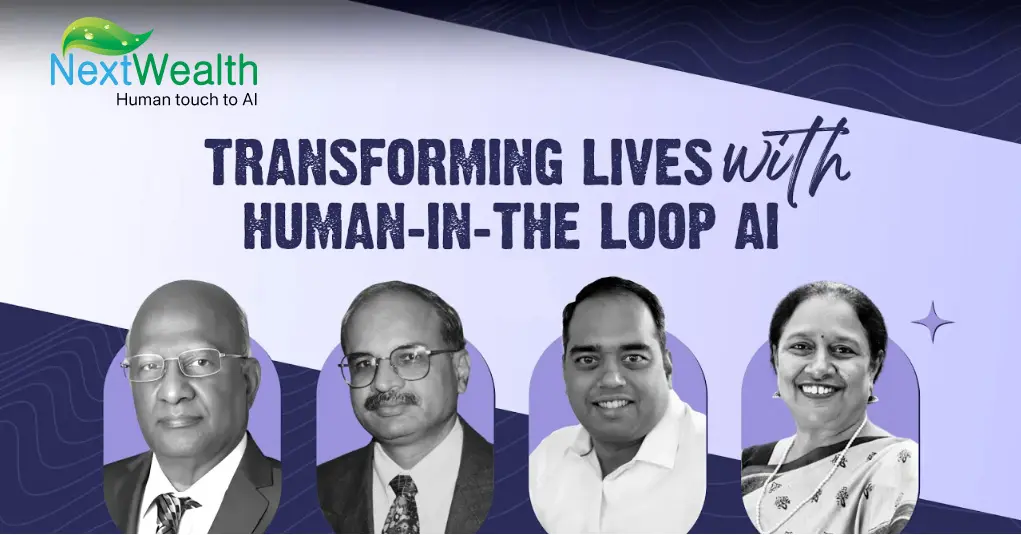
A Journey of Socially Conscious Entrepreneurship and the Future of Human-AI Collaboration in India’s Small Towns
The genesis of NextWealth in 2010 stemmed from a desire to blend technological prowess with social good, creating opportunities in underserved regions. Dr. Mitta emphasized the strategic advantage of starting the Indian IT industry without legacy constraints, enabling the adoption of cutting-edge technologies and fostering partnerships. His motivation for NextWealth was rooted in leveraging his experience to create social value through a sustainable business model, prioritizing employment over sole profit.
Prof. Anand Talwai detailed the implementation strategy, highlighting the entrepreneur-led distributed delivery model that empowers local leaders and creates jobs within their communities. This approach, coupled with a cloud-based infrastructure from inception, aimed to connect global clients with talent in smaller towns. The focus was on building a “do good and do well” organization with a strong emphasis on institutional building and a simple model of connecting global needs with local capabilities.
Mythily Ramesh chronicled early milestones, including securing their first healthcare client and the initial challenges in upskilling local talent in complex domains like medical coding. A key learning was the exceptional productivity and commitment found in these small-town employees. The company’s agile response to the COVID-19 pandemic, transitioning almost entirely to remote work within 48 hours, showcased their adaptability and resilience. Looking forward, the focus remains on expanding services in AI and GenAI with a human-in-the-loop approach, aiming for significant employee growth while building specialized skill academies.
Frequently Asked Questions
What does bridging the urban-rural divide mean in technology?
It means using technology to connect opportunities in cities with talent in smaller towns.
This helps people in rural areas access jobs, skills, and global work without moving to big cities.
Why is there a gap between urban and rural job opportunities?
Most companies hire from metro cities, while a large portion of talent comes from small towns.
This creates a gap in access to jobs, infrastructure, and career growth.
How does technology help reduce the urban-rural divide?
Technology enables remote work, cloud platforms, and digital collaboration.
This allows companies to hire talent from anywhere and deliver global services from smaller towns.
What is NextWealth’s model for creating jobs in small towns?
NextWealth follows a distributed delivery model where local centers are set up in smaller towns.
These centers connect global clients with local talent, creating jobs within communities.
How does this model benefit local communities?
It creates stable employment, reduces migration to cities, and empowers women and first-generation graduates.
and supports local economic growth through sustainable job creation.
How does NextWealth use technology to create social impact?
At NextWealth, we combine cloud-based infrastructure, AI services, and local talent networks to deliver
global work from small towns — building a model that drives both business success and social impact.