

Instance Segmentation Services
Pixel-accurate annotation for computer vision teams
Your model can only be as sharp as the masks it learns from. When two overlapping objects blur into one blob, or a mask bleeds a few pixels past an edge, the error doesn’t stay small, it compounds through every training cycle and shows up as a missed defect, a misread scan, or a robot arm reaching for the wrong item. Instance segmentation is the discipline of getting that boundary exactly right, object by object, pixel by pixel and it’s one of the most labor-intensive, quality-sensitive annotation tasks in computer vision today.

Image Annotation
Video Annotation
Text Annotation
Audio Annotation
3D / LiDAR Annotation
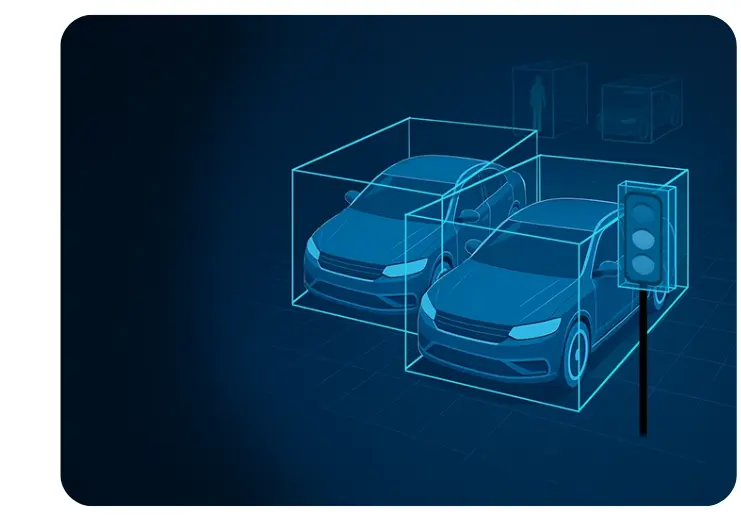
Synthetic Data QA
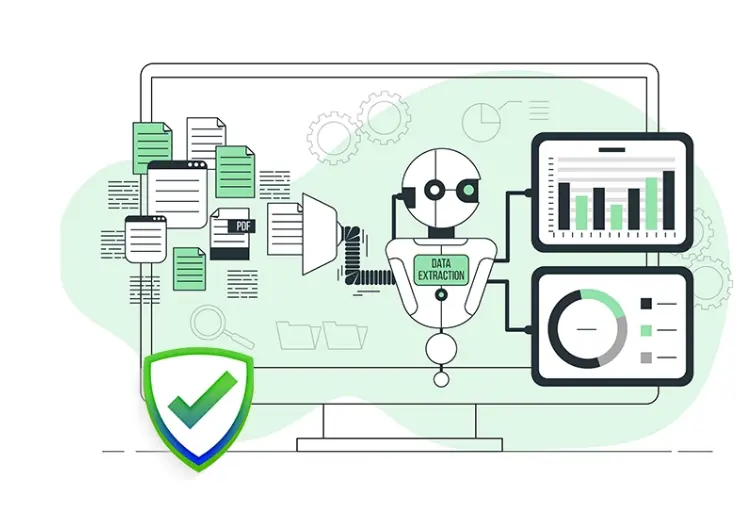
Types of Instance Segmentation

Two-stage (region-based) segmentation
The traditional approach, exemplified by architectures like Mask R-CNN. The model first proposes candidate regions likely to contain an object, then generates a pixel-level mask within each region. This approach tends to be highly accurate but computationally heavier, making it common in offline or high-precision use cases such as medical image review.
One-stage (real-time) segmentation
Newer single-stage detectors perform detection and mask generation simultaneously in one pass, trading a small amount of accuracy for a large gain in inference speed. This class of models is what makes live-video and edge-device segmentation practical, think quality-control cameras on a production line or a drone processing frames mid-flight.


Transformer-based segmentation
Vision transformer architectures treat segmentation as a set-prediction problem, often unifying detection and mask generation into a single end-to-end model. These architectures have become increasingly competitive on complex, cluttered scenes with many overlapping objects.
Panoptic segmentation (instance + semantic combined)
Panoptic segmentation extends instance segmentation by also assigning every background pixel like sky, road, wall to a semantic class, so nothing in the frame goes unlabeled. It’s the segmentation approach of choice when a model needs full scene understanding, not just object-level detail, such as in autonomous driving.


Video instance segmentation (VIS)
Adds a temporal dimension: the same object instance must be tracked and consistently masked across consecutive frames, even through occlusion, motion blur, or the object briefly leaving and re-entering the frame. This is significantly more annotation-intensive than single-image segmentation because identity has to be preserved frame over frame.
3D and point-cloud instance segmentation
Used with LiDAR, depth cameras, or volumetric medical scans, this variant segments individual object instances within a 3D point cloud or voxel space rather than a 2D image critical for robotics, autonomous vehicles, and 3D medical imaging like CT/MRI volumes.

Healthcare and medical imaging

Outlining individual tumors, lesions, cells, or organs on MRI, CT, or histopathology slides so radiologists and pathologists can measure size, track progression, and plan treatment with precision that bounding boxes cannot offer.
Manufacturing and quality inspection

Identifying and outlining individual defects like scratches, dents, weld flaws, misalignments on a moving production line, even when multiple defects appear on the same part or multiple parts overlap on a conveyor.
Autonomous vehicles and ADAS

Separating individual pedestrians in a crowded crosswalk, distinguishing adjacent vehicles in traffic, and identifying drivable surface boundaries all of which require instance-level precision, not just “there is a car somewhere in this box.”
Retail and e-commerce

Powering virtual try-on and product visualization, isolating individual SKUs in shelf-monitoring images for planogram compliance, and separating overlapping items in warehouse bins for robotic picking.
Agriculture and precision farming

Counting and assessing individual plants, fruits, or livestock from drone or field-camera imagery to estimate yield, detect disease, or guide targeted treatment down to the individual plant.
Robotics and warehouse automation

Enabling robotic arms to distinguish and grasp a single item from a cluttered bin of similar-looking objects, a task that depends entirely on knowing where one object ends and the next begins.
Geospatial and satellite imagery

Delineating individual buildings, vehicles, or land parcels from aerial and satellite imagery for urban planning, disaster response, and infrastructure monitoring.
Security and surveillance

Tracking individual people or vehicles across a scene for crowd analytics, incident detection, or access monitoring, where conflating two people standing close together into one instance would be a critical error.
Media, AR, and content production

Isolating individual objects or people from a scene for background replacement, visual effects, augmented-reality overlays, and automated video editing.


I am really happy at all the great things we have been able to achieve in the past 1 year. The relationship now has a solid foundation, and I am sure NextWealth will continue to be a formidable partner going ahead, bringing a delightful experience for our customers.
NextWealth has been an invaluable partner to us, significantly accelerating our growth by handling critical data operations and providing strategic insights.
NextWealth’s hard work and dedication are truly making a difference, streamlining our processes significantly. We really appreciate it!
My experience with NextWealth has been wonderful. The diligent team consistently delivers on time with a focus on quality. Their innovation-driven mindset fosters a win-win situation for both teams.
I am happy with the improvement in the performance. I have seen positive improvement, and we have a long way to go.
NextWealth’s in-depth analysis helped us pinpoint exactly what needs to be done to address the issues.
With excellence in Quality, Cost, and TAT—key pillars of any operation—NextWealth sets a benchmark for operational efficiency and beyond.
We have experienced significant growth—a success we could not have achieved without the expert support, hard work, and commitment of NextWealth.


How Many Data Annotators Do You Actually Need? A Benchmark of 20M+ Monthly Annotations Across LiDAR, Video & Geospatial Projects
3 mins read

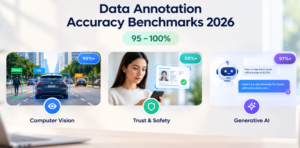
Data Annotation Accuracy Benchmarks 2026: 95–100% Quality Rates Across Computer Vision, Trust & Safety, and Generative AI
3 mins read